Operations | Monitoring | ITSM | DevOps | Cloud

What is IP transit and how does it work?

The Internet may feel like a single, seamless network but behind every connection is a vast web of interconnected networks. For businesses, Internet service providers (ISPs) and other network operators, reaching users and services around the world depends on how efficiently traffic can move between these networks. This is where IP transit comes in.

5 Step Workflow for a Zero-Downtime Load Balancer Reboot

A load balancer reboot is planned maintenance that restarts each device in a high-availability pair without intentionally interrupting service. A safe automated workflow verifies health and synchronization, restarts the standby device, confirms its recovery, performs a controlled failover, restarts the remaining device, validates traffic, and records the outcome.

How we built data-driven AI Golden Paths at Datadog

As teams rush to adopt AI, they often find themselves with conflicting workflows unique to each individual developer. To manage costs and promote good development practices, organizations need to establish Golden Paths around AI usage. AI Golden Paths are standardized flows that help developers work with agents more reliably and effectively. But how do you sift through all the possible workflows to decide what these Golden Paths should be?

CoreWeave pricing in 2026: every GPU rate and what a node really costs

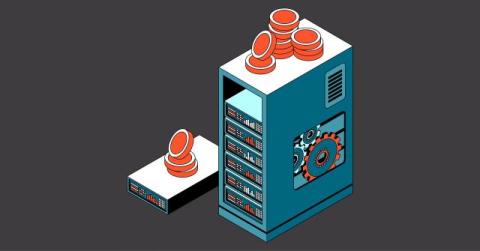
CoreWeave, a GPU cloud provider, prices start at $6.16 per GPU hour for an Nvidia H100 and reaches $8.60 for a B200, sold as fixed multi-GPU nodes: an 8x H100 node lists at $49.24 per hour on demand. Spot rates run up to 60 percent below on demand, reserved contracts discount up to 60 percent, and egress is free.

n8n pricing in 2026: every plan, the execution math, and what AI agents change

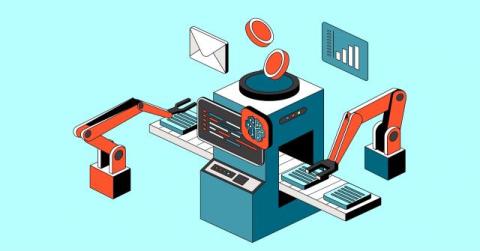
n8n pricing runs €24 per month for 2,500 workflow executions (Starter), €60 for 10,000 (Pro), and €800 for 40,000 (Business), with 17 percent off on annual billing and custom Enterprise pricing above that. Every plan includes unlimited users and unlimited workflows. The self-hosted Community Edition is free with unlimited executions; you pay only for your server.

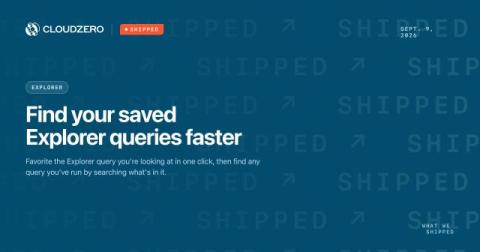
Shipped: Find your saved Explorer queries faster

Most people rebuild the same handful of Explorer queries: the monthly close view, spend by team for the staff meeting, the filter set that isolates a service you’ve been watching for two months. When we shipped query history and favorites earlier this year, it gave you a way to save up to 12 Explorer configurations.

McKinsey Says Agentic Enterprises Need "Automated Guardrails." Here's What That Means

TLDR/: McKinsey’s new research on AI transformation, published August 28, 2026, studied 20 companies that have created real economic value from AI and found that only a small number have reached “Stage 3: Agentic AI enterprise.” The capability that separates Stage 3 from Stage 2, per McKinsey’s own maturity framework, is orchestration layers and automated guardrails: the ability to govern agent actions automatically, in real time, rather than reviewing them after the fact.

Challenges and Limitations of Open Source Software

Open source software (OSS) offers organizations access to flexible, customizable, and often free software. It can reduce licensing costs and provide access to a large community of developers and users. However, open source does not automatically mean free, simple, secure, or risk-free. Organizations using OSS can face challenges around technical support, security, licensing, maintenance, functionality, and internal expertise.

How to monitor Cypress tests with Grafana Cloud

If your Cypress suite has tests that fail more often or run slower, you know it can be hard to figure out the pattern from a single job. It could be one spec that slowed down, or a single test that fails, or maybe the entire suite is trending slower. The root cause could be a bug in the app, or a flaky test, or something else.