
Operations | Monitoring | ITSM | DevOps | Cloud

From MLOps to LLMOps: The evolution of automation for AI-powered applications

Machine learning operations (MLOps) has become the backbone of efficient artificial intelligence (AI) development. Blending ML with development and operations best practices, MLOps streamlines deploying ML models via continuous testing, updating, and monitoring. But as ML and AI use cases continue to expand, a need arises for specialized tools and best practices to handle the particular conditions of complex AI apps — like those using large language models (LLMs).
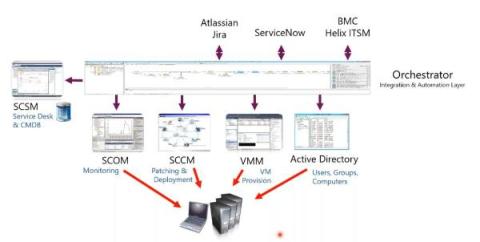

Microsoft System Center Infrastructure Monitoring and Automation in Action

The IT landscape is currently evolving faster than ever before, and the move to cloud-based solutions has emerged as a game-changer for businesses looking to future proof their infrastructure. However, the move to cloud solutions is not always straightforward and comes with challenges due to changes in management access.

Feature Friday #2: $(with)

Ever wanted to manipulate a string - temporarily - for an individual promise? Check out the with attribute and its special, $(with) variable. Sometimes you need some variation on a string for a specific case. Traditionally, to achieve this you’d simply define another variable. Here is a contrived example: I have a string, nginx and I want to emit a report that contains both the string itself and the upper case version of the string.

Fault Injection in your release automation

One of the real successes of the Agile Software development movement has been the push to have regular, frequent deployments. This has manifested as build and deployment automation and the general adoption of CI/CD. As engineers automate more processes of their software release lifecycle, an important question is how to automate Quality Assurance, which includes resilience testing and, more specifically, Fault Injection.

Feature Friday #1: ifelse()

Looking for a way to concisely set a variable conditionally? Have you heard of ifelse()? In CFEngine, traditionally class expressions are used to constrain promises to different contexts. Setting a variable to different values based on context might look like this: /tmp/feature-friday-1.cf command output That’s great, lots of flexibility, but with an increasing number of options the policy can get quite long and it’s easier for a human interpreter to lose track of the context.

Network Automation: Are You the Only One Not Doing It?

In this lively webinar, Corey Quinn from the Duckbill Group, alongside Kentik's Rosalind Whitley and Phil Gervasi, explore network automation, pondering the question, "Am I the only one not doing it?" They explore the current landscape of network automation, discussing tools, value, and the realness of Net DevOps. The trio also considers the future role of AI in networking, debating its potential beyond hype. This conversation sheds light on the cultural and technological factors influencing network automation's adoption and evolution.

Empowering Brokers: How Automation Reshapes the Mortgage Industry

Over the years, there has been a noticeable transformation in how the mortgage sector operates due to the introduction of automation. Brokers, who serve as links between homebuyers and lenders, have been significantly influenced by this technological advancement. As automation continues to expand its reach across various stages of the mortgage journey, it is crucial for brokers to embrace these changes and utilize them to maintain an edge. This article delves into how automation is reshaping the mortgage landscape and empowering brokers to deliver enhanced services to their clientele.

SOC 2 Compliance Requirements: Examples, Use Cases + More

SOC 2 compliance requirements (Service Organization Controls Type 2) ensure that customer data stays private and secure — essential for any business that stores or processes sensitive data. In this blog, we’ll explore the specifics of SOC 2 compliance, and provide a solution to help you automate and enforce SOC 2 compliance going forward.

Using AI-Powered Functional Testing Tools for Faster QA Automation Testing

Software automation testing has changed dramatically in the last several years, with an obvious trend toward automated testing techniques. Although manual testing processes are still an essential part of the testing process, test automation adoption has become more and more important in many situations. The fact that an astounding 97% of application testers have already included automated testing into their processes serves as evidence of this evolution. Developers are using AI-powered functional testing solutions to speed up QA automation testing procedures as they realize how important this trend is.

Functional Testing in the Era of Remote Work: Challenges and Solutions

The fast-changing world of software development requires functional testing to ensure application compliance and user satisfaction. This crucial software testing phase checks application functionality for compliance. Automation testing simulates user scenarios to find bugs before software delivery, ensuring quality.