When I started at Puppet three years ago, I saw a company with a tremendous customer base, an active open source community, an incredible reputation, products that solved some of the hardest problems in the operations space, and a passionate team that had deep values and was purpose-driven, both of which are at my core as a leader.
It can be challenging for even the most experienced IT organizations to embrace the latest DevOps automation tools and then ensure they are implemented in the most optimal way across a hybrid IT estate. Infrastructure teams are faced with increasing deployment complexities, budget and staffing constraints, competing priorities, and the challenge of supporting expanding development teams, impacting their organizational goals and KPIs.
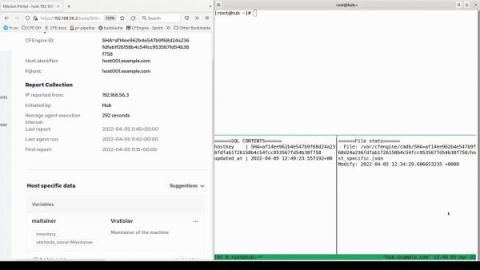
Databases are great for data processing and storage. However, in many cases it is better or easier to work with data in files on a file system, some tools even cannot access the data in any other way. When a database (DB) is created in a database management system (DBMS) using a file system as its data storage, it of course uses files on the given file system to store the data.
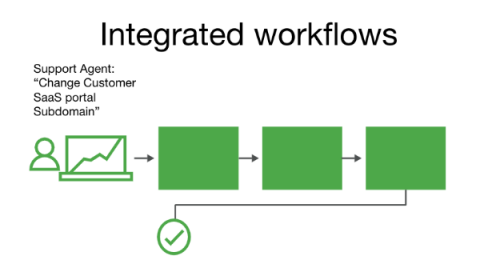
Continuous Delivery for Puppet Enterprise (PE) is a tool for streamlining and simplifying the CI/CD process of your Puppet code. Continuous Delivery for PE offers a prescriptive workflow to test and deploy Puppet code across environments. ServiceNow includes a powerful Flow Designer. Why not combine Continuous Delivery for PE pipelines with the ServiceNow Flow Designer to improve and automate your change management process even further?
The cloud is easy and powerful—until it’s not. Once companies have customers, commitments, and compliance concerns, they often have to create cloud operations teams to manage the cloud on behalf of their fellow employees. Often, organizations that migrate to the cloud find themselves hampered by inefficient cloud operations if they haven’t standardized their IT procedures for operability.
With agile development, the software development life cycle has evolved, with a focus on customer satisfaction to enhance product features based on user feedback. This helps shorten the time to market, since teams can release a minimally viable product, then continuously improve its features. The agile technique encourages team cooperation through sprints, daily standups, retrospectives, testing, quality assurance and deployment.
Let’s face it. Incidents can be expensive—really expensive. But the high cost of incidents within a production environment isn’t always due to a compromised service or negative customer experience.
Do you love SecOps in theory, but just can't seem to make it work in practice? Or, maybe you've already implemented a security operations strategy to some degree within your organization, but struggle to make IT operations and security jive as seamlessly as you would like? Either way, there's a good chance that your troubles stem from one or more of the common barriers to SecOps strategies. This article explains why businesses often fail at implementing SecOps successfully and how they can work around the roadblocks.
In this blog post we show how it is possible to run an arbitrary program, script, or execute arbitrary code in reaction to changes and generally events in a PostgreSQL database.