Operations | Monitoring | ITSM | DevOps | Cloud

Debug live production code without redeploying with Datadog Live Debugger

Some production bugs don’t show up clearly in logs or traces, and they often cannot be reproduced in a local or staging environment. When developers need more runtime detail, they typically fall back on a familiar but slow workflow: add log lines, open a pull request, wait for review and CI/CD, deploy the change, and wait for the issue to happen again. If the new logs don’t capture the right variable values or execution path, the loop starts over.

When Intelligence Stops Being Scarce

As intelligence becomes increasingly accessible, competitive advantage shifts to the operational capabilities that transform insight into consistent, confident action. As AI makes operational insight easier to generate, competitive advantage is shifting to the platforms, workflows, and operational foundations that turn intelligence into trusted action.

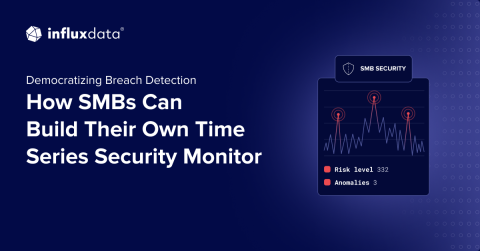
Democratizing Breach Detection: How SMBs Can Build Their Own Time Series Security Monitor

Summary Small and midsize businesses are often flying blind when it comes to security breach detection. An affordable way to address this issue without the complexity of SIEM is by modeling security events as time series data. This architecture takes audit logs from SaaS platforms and normalizes activities like logins, downloads, and token creation to establish behavior baselines that can be used to detect anomalies indicating security breaches. Table of Contents.

The Safest Place to Run an AI Agent Is On a Cluster That Doesn't Trust It

Every organization running AI agents has already made a hosting decision. Most made it by accident. The sales team switched on the agent built into their CRM. Engineering is piloting a coding agent in a vendor’s cloud. Someone on the data team deployed a LangGraph service to a VM with a database key in an environment variable, and someone else is running an agent framework on a laptop with production credentials in a dotfile. Each of these is a hosting decision.

Google Cloud Functions is now Cloud Run functions: what it is, and what it really costs

Google Cloud Functions is Google's serverless functions product, renamed Cloud Run functions in August 2024 and folded into the Cloud Run platform. You write event-driven code, Google runs it, and you pay per request, per vCPU-second, and per GiB-second after a free tier of 2 million requests a month. The catch: per-invocation billing scales your mistakes exactly as efficiently as it scales your product.

Supabase pricing: plans, free tier limits, and the bills AI is quietly creating

Supabase offers four plans: Free ($0, two projects, 500 MB database each), Pro ($25 per organization per month plus usage), Team ($599 per month, adds SOC 2 and SSO), and Enterprise (custom). The base fee is the floor, not the bill. Compute ($10+ per project), egress ($0.09/GB), storage, and monthly active user charges stack on top, so real production bills run $35 to $200 per month. In June 2026, a database company most CFOs had never heard of raised $500 million at a $10.5 billion valuation.

Shipped: API keys that keep their own permissions current

The most common reason to create an API key in CloudZero is to send data, such as AI telemetry or billing exports. Until now, that meant picking individual scopes from a list and hoping you chose the right ones. That works on day one. The problem is day ninety. Permissions on a key have always been a snapshot of the day you created it. A new AI telemetry endpoint ships in October, and a key created in August has no idea it exists.

Backup vs Sync: What's the Difference?

Cloud storage goes far beyond just uploading your files online and leaving them there. You can do much more with your files to protect, collaborate, and keep your files updated with the proper cloud storage. Two popular approaches for file management are file syncing and backups, which are different methods that you should know how and when to use to get the best from your cloud service provider.

4 Best Local SEO Companies in Vancouver, BC

Getting found in Vancouver's local search results is harder than most business owners expect. Local SEO companies in Vancouver deal with genuinely tough conditions: a competitive market across dozens of industries, NAP consistency across Canadian and global directories, and the ongoing grind of building authentic reviews on Google and Yelp. After reviewing agencies based on verified client outcomes, ratings, and real-world track records, this guide covers the four options worth your attention.

The Early Warning Signs of Financial Identity Fraud

Financial identity fraud rarely begins with one dramatic event. More often, it arrives as a handful of details that feel slightly off. A login code appears even though you were not trying to sign in. A lender sends a letter about an application you never submitted. Your bank app asks you to verify information that has not changed. Any one of these could be a mistake. That is why early fraud is easy to miss. The problem often becomes visible only after several small inconsistencies begin to overlap.