Operations | Monitoring | ITSM | DevOps | Cloud

The Place Where Modern Operations & Technology Come Together

The latest News and Information on API Development, Management, Monitoring, and related technologies.


SSIS Data Flow Components Update Brings Expanded API and Data Source Support
The latest release of Devart SSIS Data Flow Components expands support for cloud applications and databases with new objects and fields, updated API and metadata support, and improved authentication and data access capabilities across multiple connectors.

What Banking API Documentation Tells You About a Vendor, and How viaBanking Writes It
Every banking API demo looks the same. Clean dashboard, confident numbers, a sandbox that works on the first call. The differences surface three weeks into the integration, when your engineers hit an edge case the demo never covered. There is a faster way to see those differences. Read the API documentation before you read the sales deck.
Chaos Monkey Won't Find Your Bug
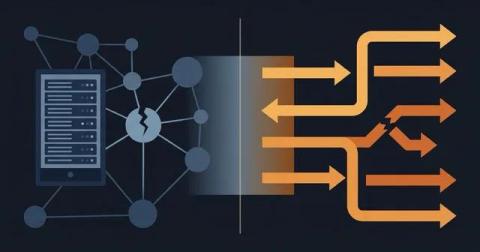
We shipped a chaos feature that never caused any chaos. Our mock server has had a fault-injection effect for years with a straightforward job: withhold the response entirely and see whether the caller copes. Last week I audited it against the actual code path. It had never withheld anything. The handler returned early without writing a response. Go’s net/http then did what it is designed to do, which is synthesize a 200 OK and flush the recorded body.

Loop engineering can fix your slow API
#loopengineering #claudecode #programming #observability

Separate Application Latency From Network Failure With Hubble
The request timed out after five seconds. The application said context deadline exceeded. The dependency was healthy, its dashboards were green, and its own latency histogram showed nothing above 30 milliseconds.


Building an End-to-End Drone Ecosystem: The Technologies That Need to Work Together
Commercial drone technology is rarely a single application running alongside an aircraft. A complete solution may include flight software, onboard sensors, telemetry, cloud infrastructure, web and mobile interfaces, data processing pipelines, analytics tools, and integrations with existing business systems.

Observe Opaque Services With OpenTelemetry eBPF + proxymock
Every SRE team operates services it cannot see into: a vendor binary, an inherited legacy deployment, a container whose owning team dissolved two reorgs ago. The routes are undocumented, the dependencies are unknown, and when a request takes 130 milliseconds nobody can say whether that time is application work or a wait across a network boundary.

Best news APIs in 2026: 6 platforms compared for coverage, enrichment, and cost
Content teams and AI builders no longer treat "news API" as one category. Some products need a raw headline feed for a dashboard; others need clustered, entity-tagged articles that slot straight into a retrieval pipeline without building a separate NLP layer on top. This list compares six providers worth testing in 2026: Newscatcher API, NewsAPI.org, GNews, Mediastack, NewsData.io, and Webz.io, judged on source coverage, enrichment, real production pricing, and how far the free tier actually goes.