Operations | Monitoring | ITSM | DevOps | Cloud

Monitoring as Code and Checkly Listed in the Gartner Hype Cycle for the Second Consecutive Year

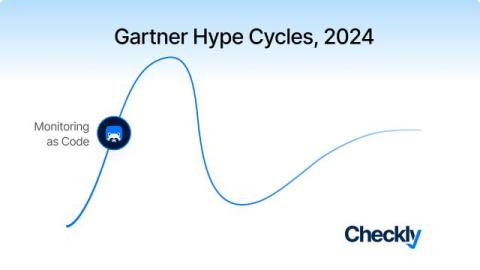
I'm excited to share that Gartner has included Monitoring as Code (MaC) as an emerging practice to their Hype Cycles for SREs again, the second year in a row. Since we founded Checkly, our vision has been that monitoring should sit in your repository, be codified, and scale with your software development. There is no alternative to MaC as it allows your engineering team(s) to work together, create and maintain checks, and ultimately own their monitoring.

Use the Gremlin API to add Chaos Engineering to your pipeline

Did you know you can use the Gremlin API to integrate resiliency tests into your CI/CD pipeline? Our partner Nagarro has even made it part of their shift left package. "What we do is shift left and add a chaos stage to the pipeline. We have created the shift left accelerator package. It integrates with load tests and Gremlin APIs to set up the test scenario.

Guardians of user experience: How REST API monitoring keeps your applications running smoothly

Modern web applications rely on invisible engines called REST APIs to function. These APIs handle crucial data exchanges behind the scenes, ensuring everything from login functionalities to dynamic content updates runs smoothly, handles client-server communication or communication across application services. But, just like any complex system, they are prone to errors and performance issues.

5 API Gateway Best Practices

For a lot of organizations, APIs are almost like a digital baseball card collection. You keep adding to it, and some of them can be monetized. Just as you need to organize and protect your most valuable cards, you need to implement the appropriate security measures around your APIs. Your API gateway is like having a dedicated binder or box just so you can access your cards and share them without exposing them to people’s hands in a way that can devalue them.

How to Monitor JavaScript Log Messages and Exceptions with Playwright

Monitoring JavaScript log messages is how you know, at a basic level, what the browser’s JavaScript engine is doing in detail. Playwright provides an efficient way to listen for console logs and uncaught exceptions in your pages. This capability is invaluable for developers and testers aiming to catch and resolve issues early in the development cycle. This article will guide you through the process of setting up Playwright to monitor JavaScript logs and exceptions, enhancing your testing strategy.

Getting Started with Ncentral REST APIs: Tips and Tricks

For some the term API can signal an immediate tune out. I have to admit, despite being in the IT game for 25 years now, I was one of those people. However, that changed to a degree when I took up the Head Nerd role here at N‑able, driven in no small part by the fact that I had to deliver a Head Nerd Boot Camp on Leveraging APIs in N‑central. Unfortunately, these APIs were SOAP based, hadn’t had much development in recent years, and weren’t exactly easy to work with.

APIs: The Silent Heroes of Data Center Management

Data centers typically operate a diverse array of systems including environmental controls, power management, IT service management (ITSM) platforms, and enterprise resource planning (ERP) systems. DCIM software with well-documented, open APIs ensures these systems can communicate and function cohesively. Interoperability fosters.

Writing Your First Visual Regression Check in Playwright

Visual regression testing ensures that your web application looks as expected and that any visual changes are intentional. These tests amount to comparing two screenshots and looking for pixels that are different. With Playwright, you can achieve this with just a few lines of JavaScript. Let's walk through the process using a simple example. Once we’ve done a visual regression test start to finish in Playwright, we’ll show how you can add Checkly tools to create visual regression monitors.

You can now manage notification preferences via our API

Our service can detect various problems with your website: whenever it is down, or a broken link is detected, your cron job isn't running on time, and much much more. Whenever we see a problem we can notify you via email, Slack, webhooks, and various other channels. Up until now, you could configure these notification channels in our UI, but now you can do this via our API as wel.

OpenTelemetry Metrics: Concepts, Types & Instruments

OpenTelemetry (OTel) Metrics are part of the OpenTelemetry project, which provides tools, APIs, and SDKs for telemetry data collection. These metrics capture system performance data like request latency, error rates, resource usage, and throughput. OTel aims to standardize observability across languages and platforms, making it easier to use and integrate telemetry data. Metrics are one of three core signals of OpenTelemetry along with logs and traces.

Incident Response for Critical APIs

Incident response is a structured approach to addressing and managing the aftermath of a security breach or cyberattack, also referred to as an IT incident, computer incident, or security incident. The goal is to handle the situation in a way that limits damage and reduces recovery time and costs. Additionally, it aims to improve strategies and solutions to prevent future security incidents.