Operations | Monitoring | ITSM | DevOps | Cloud

Juggling AI tools works, until it does not

This isn't a teardown. This stack is a genuinely reasonable way to start. An AI-first editor handles day-to-day writing. A terminal-based coding agent takes on tasks that need more autonomy: a full feature, a migration, a stubborn bug. A few scripts connect the pieces, trigger a run, and post a result somewhere. An observability tool checks what happened after the fact. Every part of that is a real, capable tool. For the first few months, on a small team, it works.

From Fragmented Data to AI-Powered Intelligence: How Leaders Make Operational Truth Actionable

Over the last several years, organizations have invested heavily in visibility, automation and artificial intelligence. Yet many still face a common challenge: They have more dashboards than ever, but getting a reliable answer often requires manual investigation, reconciliation and validation before action can occur. The problem is rarely a lack of data. More often, information lacks the shared context people need to understand it and act.

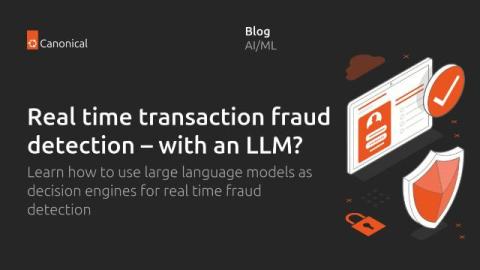
Realtime transaction fraud detection - with an LLM?

Conversational AI with a chatbot is great for drafting emails or debugging code, but it’s less ideal for real-time application middleware. If you’re trying to inspect a financial transaction for potential fraud in the middle of a checkout loop, you don’t need an LLM to write you an essay about why a credit card transaction looks suspicious – you just need a probability score, and you need it as fast as possible.

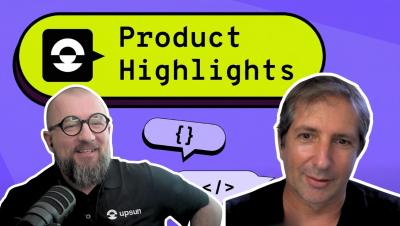
Watch this AI agent find and fix performance bottlenecks

Anyone can claim an AI agent will fix your performance problems. This demo shows exactly what it looks at and what it hands back. In this Product Highlights conversation, Sylvain Guittard, Senior Director of Product at Upsun who leads the team behind the Upsun console and CLI, runs the Upsun Cloud Performance Agent live on a demo project. His take: "You have a patch that is already available, and a recommendation, so you can see if it fits or not to your context." We get into.

This AI agent finds your app's bottlenecks and suggests the fix

Most teams collect the profiles and traffic data that explain a slowdown. Almost nobody has time to read it before users notice. In this Product Highlights conversation, Sylvain Guittard, Senior Director of Product at Upsun who leads the team behind the Upsun console and CLI, breaks down the Upsun Cloud Performance Agent, the first background agent running on Upsun Cloud. His take: "We monitor everything, we feed that into an agent, and the agent will be capable of finding what the bottlenecks are in your application. And on top of it, it gives you a patch, or a way to fix it." We get into.

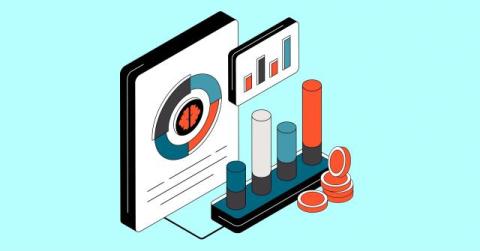
AI cost allocation: how to attribute AI spend by team, product, and customer

AI cost allocation is the practice of attributing every dollar of AI spend to the team, product, feature, or customer that generated it. That spend includes API tokens, GPU compute, per-seat tools, and shared infrastructure. It's harder than cloud allocation because AI spend arrives untagged, spans vendors, and pools in shared resources. Four methods cover most cases: tag-based, key-based attribution, proportional split, and usage-telemetry.

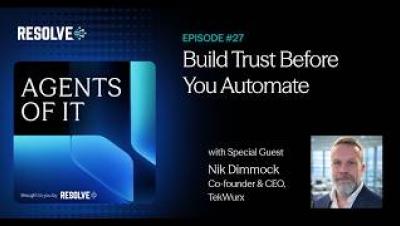
AI in IT Operations: How to Build Trust, Automate Smarter & Prepare for Autonomous IT

What does it take to make AI and automation actually work in enterprise IT? In this episode of Agents of IT, Resolve’s Zach Austin sits down with Nick Dimmock, Co-Founder and CEO of TechWorks, to discuss how IT automation is evolving, why trusted data matters, and what organizations need to build before AI can deliver meaningful business outcomes.