Operations | Monitoring | ITSM | DevOps | Cloud

The October 20, 2026 Google Cloud europe-west2 Outage

Multiple Google Cloud services in europe-west2 (London) experienced service disruptions, elevated error rates, API timeouts and processing latency on October 20, 2026, according to Google's incident page. Google's preliminary incident report records the start at 23:00 US/Pacific on October 19, 2026 (06:00 UTC on October 20) and the end at 05:10 US/Pacific on October 20 (12:10 UTC) - 6 hours 10 minutes.

How a Suburban Injury Team Gives Crash Victims Focused Attention

Texas's suburban communities are closely connected by busy roads, growing neighborhoods, and daily commutes that keep people moving between work, home, and family responsibilities. When a crash interrupts that routine, victims may suddenly have to manage physical recovery while dealing with transportation problems, financial pressure, and uncertainty about what comes next. The experience can feel especially overwhelming when several parts of a person's life are affected at once, making focused attention important rather than a one-size-fits-all approach.

5 Questions to Ask Before the Next Cloud Outage

On October 20, a power failure in one of Google Cloud’s three London zones disrupted Revolut, Lloyds, HSBC and others for hours. One zone failed, errors spread region-wide, and Google warned customers they might not be able to create new workloads to fail over to. Most teams find out how resilient they are during an outage, not before one. These five questions let you find out first.

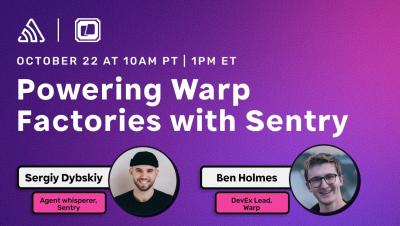
Powering Warp Factories with Sentry

Recently Warp introduced some new cloud software factories for setting up bespoke workflows and agents within your organization. The best part is that you can integrate Sentry directly into these factories. Whether you want to create an automated debugging workflow leveraging Sentry context or capture agent metrics for evals and performance data, Warp and Sentry have got it covered.

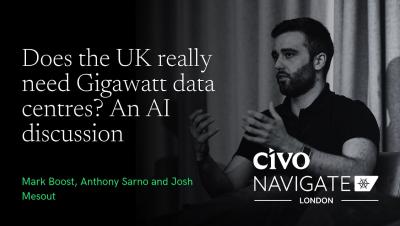
Does the UK really need Gigawatt data centres? | Civo Navigate London 2026

Everyone's racing to build gigawatt AI factories by 2035. What if the faster route is already plugged in? Swarms of agents need far more compute than a chat prompt ever did, and the scaling laws say demand isn't slowing. But in the UK, anything over 15MW can mean waiting until 2032 or later for a grid connection. So the panel makes a different case: smaller sites on existing power and fibre, linked into one national campus, live in less time than a single mega-build.

Create Custom Visualizations | Introducing Grafana Pages | New from Grafana AI

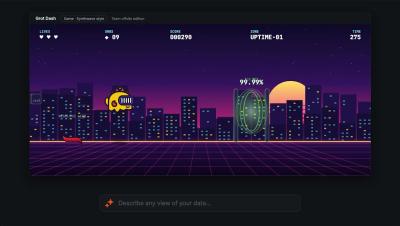
Grafana Pages is now in public preview in Grafana Cloud. Tell Assistant what you want it to see , and Pages builds it: a custom visualization, an app, a slide deck, or even a game. Pages are for the moments a dashboard can’t cover, like walking leadership through a launch, starting your day with a view of the services you own, or turning an incident into a story everyone can follow.

Before you build your own internal platform, run these numbers

"We'll just build it ourselves" is usually said with confidence and a rough headcount estimate. Six months later, the team that was supposed to spend two sprints on it is still maintaining it a year in, and the platform that was meant to save engineering time has become one of the things engineering time goes to. Build isn't automatically the wrong call. Sometimes it's the right one.

A walkthrough of a root cause analysis with ilert AI SRE

It's 3am and a complaint has made its way to you: customers can't see product reviews. Nothing has crashed, and no alert points anywhere useful. Somewhere in your stack one service is failing, and the one showing the error is probably not it. Before you can fix anything you have to find it, and that search is most of your night. Now imagine you open the laptop, type one sentence and go grab a coffee. By the time you’re back, the root cause is ready, evidence attached. Your job is to check it.