Operations | Monitoring | ITSM | DevOps | Cloud

Harvey AI pricing in 2026: every reported number, and how to build the business case without a rate card

Harvey AI pricing is not published: every deal is sales-negotiated. Reported figures across procurement research converge on roughly $1,200 per lawyer per month at the base, 20-to-25-seat minimums, and 12-month terms, putting reported entry floors near $290,000 to $360,000 a year. Premium bundles run higher. No free tier, no monthly plan, no self-serve. Every figure on this page is labeled for what it is: disclosed by Harvey, reported by named research and journalists, or computed from those reports.
AI budget season: 87% are raising it, 61% can't justify it

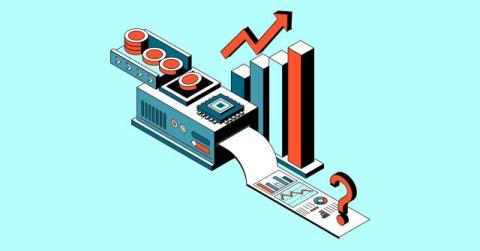
87% of finance leaders are raising their AI budget for FY2027, 45% of them by more than 20%, even though 61% already spend more on AI than they can justify. Most can't see where it goes: 54% can't break AI spend below a rough category, so budgets default to the total and keep climbing. The teams that allocate spend, tying each AI dollar to the team, product, or outcome behind it, are the ones who can defend the number to a board.

The Jolokia Problem: Eight CVEs, One Door in Apache ActiveMQ

The Apache ActiveMQ Jolokia endpoint has been the route to remote code execution in three separate years. In 2023, it was reflection into the JVM. In 2024, a default configuration left it without a login. In 2026, it was the broker's own management operations, patched in March, exploited in April, and reopened three more times by summer.

IBM MQ Alternatives: When ActiveMQ and Artemis Make Sense

What IBM MQ costs an organisation is a knowable figure. It comes off a renewal statement, an entitlement count or a licensing review, and finance can put a number against it down to the core. What replacing it would save is not knowable in the same way. There is no independent case study in the public record carrying real durations, team sizes and application counts, and every migration timeline in circulation comes from an organisation selling the migration.

Get Ship Done: Everything We Shipped in October 2026

Harness October 2026 Updates: 150+ Features, Cosmos, FedRAMP 20x This Month's Biggest Ships: The shipping velocity at Harness skyrocketed. Harness shipped 150+ features in October, one about every 5 hours across 31 days! October's list covers both ends: code creation and software delivery. The biggest ship is Cosmos, a new agent that takes engineering work from ticket to pull request. The rest carries that pull request to production and keeps it safe.

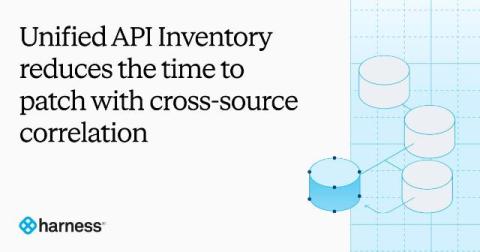
Unified API Inventory reduces the time to patch with cross-source correlation

Cross-source API correlation connects runtime findings to their code, documentation, and fixes for improved defense against machine-speed attacks. It's late on a Thursday, and a runtime alert fires on POST /api/v2/payments in production. The finding is clear. What happens next is not. In fact, it creates a host of questions to be answered: Every AppSec team knows this hunt. And every day spent hunting for the right repo and owner is a day the attacker can still exploit a vulnerability.

Instrumentation Hub in Grafana Cloud: start easier, stay in control

It's no secret that getting started with observability can be much harder than it should be. That's why, at ObservabilityCon 2025, we introduced Instrumentation Hub: a guided, scalable way to roll out observability coverage while still keeping you in control. Today, we’re excited to announce that Instrumentation Hub is now Generally Available in Grafana Cloud.

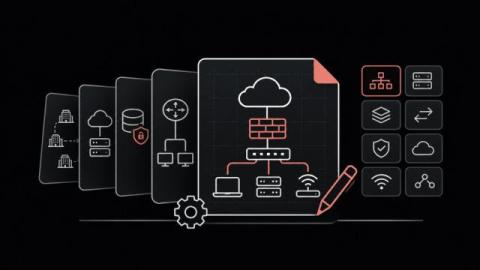
Network Diagram Examples: 8 Types and How to Draw Them

Most network diagrams we come across land in one of two piles: the one drawn for an audit years ago and never opened since, and the one so crowded that finding the firewall takes squinting. The network diagram examples below sit between those piles, 8 diagrams IT teams actually use, sorted into physical, logical, and cloud or WAN. For the full build process behind one map, see our guide to the network topology diagram.

What Is Cloud Networking? Types, Benefits and How to Monitor It

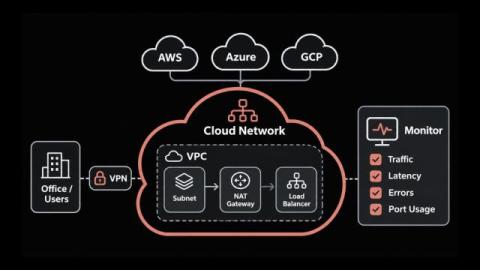
Think about Outlook, Salesforce or the shared drive your staff open each morning, and at least one of them probably runs in AWS, Azure or Google Cloud. That puts a good share of your traffic on a cloud network nobody on your team has ever seen. You still own a lot of that path (the VPN link, the route tables, the security groups), and it breaks in ways an office network doesn't.

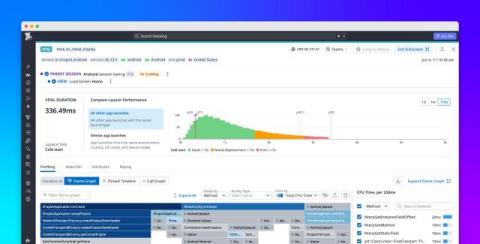
Diagnose frontend performance issues with RUM Profiling

When a mobile application takes too long to launch or becomes unresponsive, it can be difficult to find the cause. Datadog Real User Monitoring (RUM) helps developers detect these issues and understand which users are affected. But knowing that an application is slow doesn’t tell you which part of its code is responsible. Engineers often need to reproduce the problem locally, piecing together performance metrics and code execution information from separate tools.