Operations | Monitoring | ITSM | DevOps | Cloud

How Observability and Real-Time Data Can Improve Warehouse Operations

Warehouse operations generate a constant stream of information. Goods are received, inventory moves between locations, orders enter picking workflows, stock levels change, and shipments leave the facility. When these activities are managed through disconnected systems or delayed manual updates, managers can struggle to understand what is actually happening on the warehouse floor.

How Azure Fundamentals Can Strengthen Your Cloud and Digital Technology Skills

Many people encounter AZ-900 (Microsoft Certified: Azure Fundamentals) as a checkbox and never ask what it teaches them beyond Microsoft Azure. The more useful question is whether a fundamentals-level credential can build digital skills that remain relevant after the exam or whether it amounts to little more than a badge.

Can You Really Earn Crypto for Free? Faucets, Rewards, and the Costs Behind Them

Crypto faucets and reward platforms have existed for years, but the idea of "free crypto" still deserves a closer look. Sites such as cointiply.promo cover services where users can earn small crypto rewards through faucet claims, surveys, offerwalls, ads, referrals, and other activities. These platforms can distribute genuine rewards, yet users rarely receive something for nothing. They usually exchange time, attention, personal data, or participation for a small payment.

The rise of autonomous digital operations

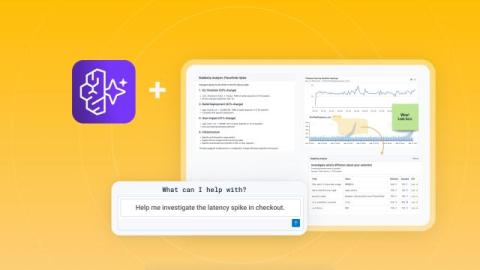
Monitoring has come a long way. Your team has dashboards, alerts, and automation that would've looked like magic a decade ago. Most days, things just work. But underneath all that tooling, a lot of the actual work still happens manually. An alert fires, and you pull the page-load metric from one tool, the user session logs from another, the backend trace from a third, and line them up until the story makes sense. Ten minutes, maybe fifteen pass, then you are able to fix it and move on.

Log Filtering: How to Cut Log Ingest Volume Without Losing Evidence

Every log estate reaches a point where volume grows faster than the value inside it. The usual response is to find the biggest source and drop it. Cutting volume is the easy part. Cutting the right half takes judgment. Log filtering is only one of four options for an expensive source, and the other three matter just as much. In this blog, you will: By the end you can defend every rule you write, including the ones that keep data. A volume cut fails in two directions.

ITSM for Healthcare: IT Service Management in Hospitals and Health Systems

How long does a nurse stand at a workstation waiting for a record to load before the ward gives up and reaches for paper? In most hospitals nobody measures that number, and the ticket that reaches IT describes a symptom instead of a cause. Hospital IT support runs on a different clock from corporate IT. There is no quiet Sunday night and no safe window for maintenance.

Relational Query Superpowers

I'm investigating repeated errors in my e-commerce application, and I need to get enough context in a single Honeycomb query to piece the entire picture together. Each query returns events based on the event's WHERE clauses, but I want to know several things from outside of the event that recorded an error. Things like: Those attributes are all over the trace. That's going to make a single query tough, right? Wrong!

Two cats, two dogs, four vendors, and the model the AI couldn't find (Tech Talk Companion)

Tech Talks went dark for a few months, and on episode 13 I finally got to ask why. Mathias Palmersheim’s answer, delivered completely straight, was that his users were unhappy with the availability and usability of their feeders and their litter box, and he wasn’t allowed back on stream until that got fixed. The users are two dogs and two cats, and they have titles. Maisie, a Shiba Inu who came to him through a rescue, is the recently promoted chief executive pawofficer.

Data residency in 2026: what regulators now expect from your cloud, and how to prove it

Ask a compliance team where their EU customer data lives, and most will point confidently at a dashboard showing a Frankfurt or Dublin region. Ask their legal counsel whether that data is beyond the reach of a foreign government demand, and the confidence usually drops. Those are two different questions. Since 12 September 2025 there has been a dated EU obligation that turns on the second one rather than the first.