Monitoring of Video Cameras
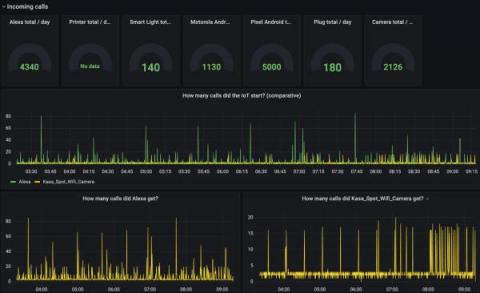
Video cameras are gaining more and more applications every year. Besides the security issues, a lot of others, related to house and family care, entertainment, education etc are widely used nowadays.


Video cameras are gaining more and more applications every year. Besides the security issues, a lot of others, related to house and family care, entertainment, education etc are widely used nowadays.
Application Performance Monitoring is undoubtedly the hottest tool to accelerate any product’s growth in the modern market. The term has grown from a simple performance tracking operation to full-fledged infrastructure, network, and application observability. This evolution has only helped bring more and more growth into products. It is essential to choose the best-suited monitoring solution for your apps since observability involves way too many moving pieces.
As the number of connected gadgets in our homes, offices, and industrial networks continues to grow exponentially, keeping IoT devices secure has become a vital part of our everyday lives. However, our webcams, printers, and smart plugs often lack security features due to their fast time to market, making them particularly vulnerable to attack. And because security metrics themselves can be tricky to assess, tracking IoT device security is increasingly a challenge.
In the tech industry, we obsess over the latest and greatest. When it comes to observability, we’re always looking at the most advanced hardware, the enthusiasts’ favorite systems, and the tech venture capital trends to get an idea of what to build for next. observIQ is no exception.
The MSIX orb is the first “Windows-only” orb from CircleCI. When Microsoft approached us with the opportunity to build an orb that would help Windows developers build on our platform, we were enthusiastic. Most of our orbs, and general workload, revolve around Linux and utilize Bash. However, we recognized the deep need to provide good CI/CD solutions for building applications on Windows, and with use of PowerShell growing steadily within Linux, it was time to take the plunge.
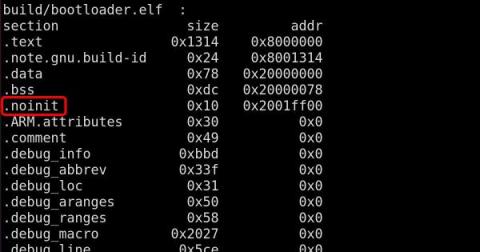
Imagine there’s an embedded system that needs to persist some state when the processor restarts (either intentionally or due to a catastrophic error). This could be some external hardware information (what’s the position of a motor or actuator?) or a method to communicate the reset to the user (display some information on the device’s display). A simple way to store information through a reboot is to use what’s called“non-initialized” memory.
A single Kubernetes cluster expends a small percentage of its total available assigned resources on delivering in-cluster networking. We don’t have to be satisfied with this, though—achieving the lowest possible overhead can provide significant cost savings and performance improvements if you are running network-intensive workloads.