Operations | Monitoring | ITSM | DevOps | Cloud

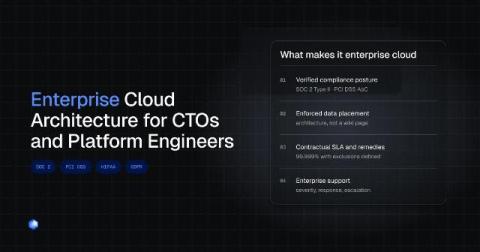
Enterprise Cloud Architecture for CTOs and Platform Engineers

Most teams that say they have an enterprise cloud strategy mean that they have workloads running on a hyperscaler and a set of compliance controls documented somewhere. That is a cloud deployment, but it is not necessarily an enterprise cloud operating model. Google Cloud’s 2025 platform engineering research with ESG describes platform engineering as a strategic discipline tied to delivery, governance, and operational outcomes, rather than simply another infrastructure cost.

Run an Incident Response Game Day for Your On-Call Team

An incident response game day is the cheapest reliability investment most engineering teams still refuse to make. The 2026 Catchpoint SRE Report, based on 418 responses from reliability professionals worldwide, names it as one of five defining trends: resilience has to be practiced. Teams that deliberately test failure report more confidence and better preparedness. And yet the same report finds production chaos engineering is still far from standard practice.

Now Available: env zero Environment Tagging

Environment Tags are now available in env zero. You can attach key-value tags to any environment, like team=payments or cost-center=1042, to record ownership, cost attribution, or any other classification your project hierarchy doesn't express. Tags can be set in the UI or defined as code, filtered on across your estate, changed in bulk, and queried alongside your deployed infrastructure. The request came from customers managing ownership outside the platform.

8 Terraform Drift Detection Tools Enterprise Teams Actually Use in 2026

Terraform drift detection tools help enterprise teams avoid the chaos and expense of uncontrolled infrastructure changes. Your cloud resources can drift out of sync when someone makes changes outside the normal IaC workflow. Picture getting an alert the moment someone tweaks your security group settings manually instead of using Terraform… this isn't just wishful thinking, it's possible with the right tools.

How to Transform Your WordPress Site Into a Learning Hub

A WordPress site can do far more than publish articles or display service pages. With careful planning, it can host structured lessons, enroll learners, track completion, issue certificates, and support paid access. That change matters for schools, coaches, clinics, and training teams that need education beyond their main content. A well-built hub gives visitors a clear path from interest to progress, while administrators gain cleaner data.

Industrial Processing Equipment: Key Factors Before You Invest

Industrial processing equipment affects production speed, labor demand, product consistency, and operating expense. An unsuitable purchase can cause stoppages, difficult cleaning, excessive wear, or limited capacity. Yet many buyers move forward without fully understanding the conditions their equipment must handle. Taking time to evaluate a few key factors upfront can prevent costly mistakes after installation.

The Real Cost of Launching and Scaling a Sharetribe Marketplace

When you first dream of building an online marketplace, costs are the last thing on your mind. You're imagining buyers and sellers connecting, that first transaction ping, and creating something that genuinely matters. Then reality taps your shoulder. Bills appear. The question shifts from "wouldn't it be cool if..." to "what's this actually going to cost me?".

Building an Operational Runbook for Exporting and Managing WhatsApp Business Chats

WhatsApp is widely used for customer support, supplier coordination and project communication. However, important information can become difficult to manage when it remains inside individual conversations or employee accounts. An operational runbook creates a consistent process for exporting relevant chats, reviewing the files and storing them securely. It also reduces the risk of losing business context during employee offboarding, account changes or project handovers.

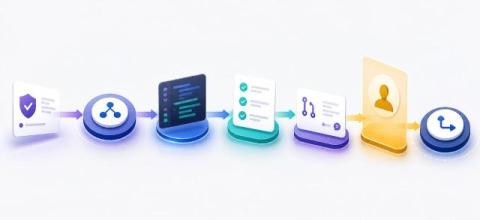
How we made vulnerability fixes review-ready with Agentic Pipelines

Routine vulnerability fixes are rarely difficult in isolation. The interruption that they cause is the problem: pick up the ticket, trace the dependency, update the package or image, regenerate files, run the checks, open the pull request, then return after deployment to close the loop. That repeated handoff was a good candidate for automation with agentic pipelines. The goal was simple: start the day with a tested pull request instead of another ticket to pick up.