Operations | Monitoring | ITSM | DevOps | Cloud

The latest News and Information on DevOps, CI/CD, Automation and related technologies.

A typical day in the data centre

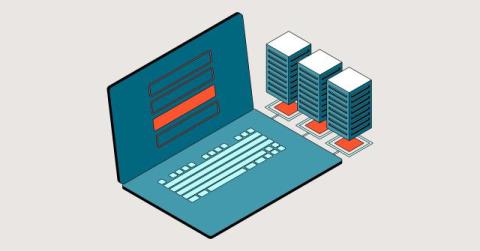
What does a typical day look like for the people working behind the scenes of a data centre? From hardware installations and cabling to troubleshooting, customer requests and supporting critical works, every shift brings something different. In this 'day in the life', Leon Strong, Data Centre Services Engineer for Maidenhead, shares what it’s like to work in a hands-on technical role, what they enjoy most and their advice for anyone considering a career in data centre engineering.
How Automated Low Disk Space Remediation Closes the Loop

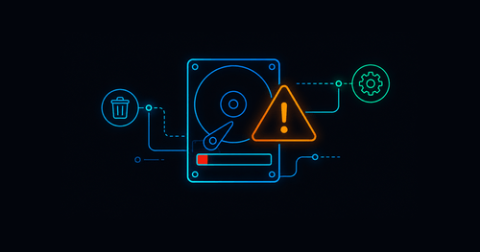
Low disk space remediation is the process of diagnosing storage consumption, safely recovering capacity, and confirming that the affected system and its dependent services are healthy. Automated remediation begins when a monitoring or AIOps platform detects a threshold breach and triggers a governed workflow.

A simpler way to run AI agents in Bitbucket Pipelines

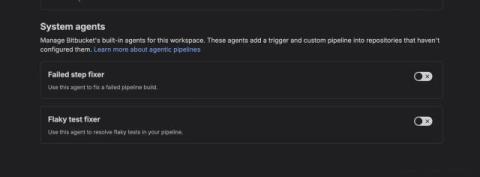
AI agents can help investigate failed builds, fix flaky tests and automate other development tasks. But setting up those agents has required more Pipelines configuration than it should. Agent-powered steps often need different compute, permissions and runtime settings from ordinary build and test steps. Until now, teams have either repeated those settings across every agent-powered step or tried to make one set of global defaults work for everything.

The network layer securing your multicloud traffic

You migrated the workload. The app's live across clouds. But is the traffic between them actually locked down, or just assumed to be? There's a layer of the network doing the heavy lifting here, and it goes by a name that gets confused with something else constantly. Full breakdown on our blog, link in bio.

Stop assembling audit evidence by hand: generate it on every deploy

Somewhere in every compliance program is a person who spends the week before an audit pulling logs out of several different systems, reconstructing who had access to what, and hoping the screenshots match what the auditor actually asks for. None of this work makes the system more secure. It just makes the existing security visible to someone who's checking. That gap, between the controls that are actually in place and the evidence that proves it, is where most audit prep time goes.

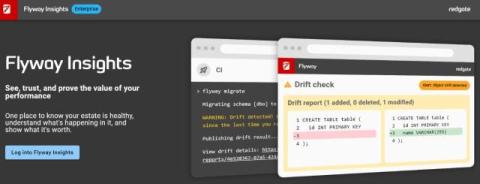
Introducing Flyway Insights: see the change, know the impact

How much of your database delivery can you actually see? For most teams, the picture is scattered. Deployment status lives in CI logs and scripts. Drift appears outside the process. And with AI multiplying the volume and speed of changes moving through pipelines, the risk that comes with low visibility rises with every release.

Organizations Are Confident Their Agents Are Behaving. But They Can't Check.

The State of Agent DLC 2026 asked 700 organizations already running AI agents how confident they were across five domains: testing, security, inventory, cost, and rollback. Confidence came back between 74% and 77% in every domain we tested. In most of them, the controls that would justify it are not there. “No, I don't have a nanny cam, but I'm sure my kids are OK.

How to right-size the handoff between two agents

model-right-sizer-schema is a Claude Code skill that designs the typed contract between one agent and the controller that dispatches it. Point it at an agent plus its controller and it returns a JSON prescription with typed in/out fields, an exclusion list that keeps raw logs out of the reply, a before/after size delta, then writes the contract into the agent's own file. It picks from nine portable output-shape families, or your repo's own.

Your patch window just went from 30 days to hours

Thanks to AI, vulnerability disclosures are exploding. In mid 2026, we're seeing 130+ a day and climbing, with roughly a quarter already being exploited in the wild before they're even disclosed. The result: security teams that used to have 30 days to respond now feel pressure to issue patches in a few days or hours. This video covers why "are we safe?" isn't a question you get to answer once: That last drill is what separates teams that panic when a real incident hits from teams that already know the answer.