
As we are fond of saying here at Honeycomb, context is king, and one of our favorite ways to share the context in our brains is with Boards. We recommend using Boards to share query structures you’ve developed for reuse, share visual graphs for ongoing review of systems, share your brain with your colleagues…and your future self.
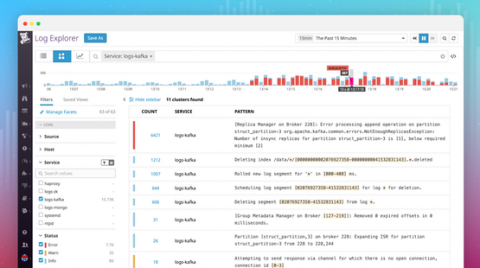
From production monitoring to security concerns, it’s critical for businesses to analyze and review their log data. This is particularly true for large and enterprise companies, where the sheer amount of data makes log analysis the most efficient way to track key indicators. CTOs, in particular, are dealing with the challenges of this massive amount of data flowing through their organization, including how to harness it, gather insights from it, and secure it.
Datadog makes it easy to correlate, compare, and visualize metrics from your infrastructure and applications. Some metrics, however, are inherently so noisy that the graphs become unreadable (the dreaded spaghettification problem), and you lose the ability to extract essential information about trends and large-scale deviations. For cases like these, we provide several smoothing functions that help you identify trends in your metrics.
This week we highlight articles featuring the ultimate guide to monitoring Kubernetes using Prometheus and Grafana, how to build effective dashboards, and a guide to help demystify PromQL.
Sumo Logic is no different than most companies — we are in the service of our customers and we seek to build a product that they love. As we continue to refine the Sumo Logic platform, we’re also refining our feedback loops. One of those feedback loops is internal dogfooding and learning how our own internal teams such as engineering, sales engineering and customer success, experience the newest feature. However, we know that that approach can be biased.
Welcome to a fresh new Honeycomb navigation! At the hive, we’ve been working on making navigating your Honeycomb environment simpler and more intuitive, and just deployed some changes that we hope you’ll agree have made progress toward that goal.
The Sumo query language can be a source of joy and pain at times. Achieving mastery is no easy path and all who set on this path may suffer greatly until they see the light. The Log Operators Cheat Sheet is a valuable resource to learn syntax and semantics of the individual operators, but the bigger questions become “how can we tie them together” and “how can we write query language that matters?”