Operations | Monitoring | ITSM | DevOps | Cloud

From Claude Code to Production: A Monitoring Checklist for Python Developers

Python is the native language of AI-assisted development. Models are really good at writing it, and a lot of people are now shipping it without ever having written much Python themselves. The whole thing is really simple. You prompt an app, Claude Code or Cursor produces a working Flask or FastAPI backend, and you’re live in a few hours. However, there’s still a big difference between “it works on my machine” and “it works in production”.
NVIDIA B300 vs. NVIDIA B200: Blackwell Ultra vs. Blackwell

The Blackwell architecture arrived in 2024 as NVIDIA's answer to the next era of AI compute. The B200 set a new standard for inference performance, memory capacity, and training throughput, and many teams are still ramping up their use of it today. Then came Blackwell Ultra. The B300 is built on the same silicon foundation as the B200: same dual-reticle die design, same TSMC 4NP process node, same NVLink 5 interconnect.

How to measure AI ROI: metrics and a framework finance can actually run

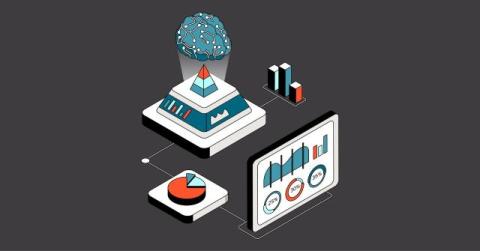
To measure AI ROI, compare attributable value (revenue lift, cost savings, engineering time recovered, risk reduction) against fully loaded AI spend (API usage, subscriptions, infrastructure, people time) at the unit level: per initiative, per team, per task. The formula is simple. The instrumentation is the hard part, and it's where most organizations are failing: in CloudZero's 2026 survey, 34% of finance leaders couldn't produce a credible ROI number at all.

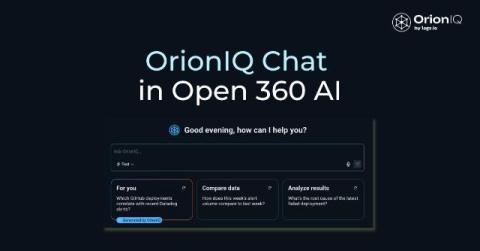
Open 360 AI's chat is now powered by OrionIQ

OrionIQ’s agentic investigation is now built into Logz.io Open 360 AI. Ask a question and OrionIQ investigates across your telemetry, shows its work as it goes, links every finding back to the exact query behind it, and tells you how much to trust the answer. Today we’re bringing OrionIQ Chat into Open 360 AI. This is the first OrionIQ product to ship inside the Logz.io platform, and it’s the same agent that powers the standalone OrionIQ app, now available right where you already work.

Chaos Hub in docs, Prompt Library for MCP: what's new in Resilience Testing | Harness Blog

The latest Resilience Testing documentation update brings Chaos Hub directly into the docs, making it easier to discover and use fault, probe, and action templates. It also introduces a Prompt Library with ready-to-use AI prompts for Harness MCP, helping teams run resilience workflows faster using natural language.

AI SAST Explained: Why Traditional Application Security Is Reaching Its Breaking Point | Harness Blog

AI has fundamentally changed software development. Developers are writing more code than ever. AI coding assistants can generate features, tests, documentation, and infrastructure configurations in minutes. Engineering organizations are seeing meaningful productivity gains as AI becomes embedded throughout the software development lifecycle. But there is a catch. Security teams now face a difficult reality: application security was already struggling to keep pace with software delivery before AI arrived.

How the UK Conveyancing Process Can Be Automated and Streamlined Using Digital Tools

Buying or selling a home has historically been a waiting game filled with massive paper trails, slow posts, and constant phone chasing. Fortunately, the UK property market is undergoing a significant shift as innovative digital tools replace archaic workflows.

Enterprise AI isn't broken; your data is broken

A friend who runs data engineering at a mid-sized logistics company once showed me something that made me laugh, and then made me a little sad. Her team spent four months building a chatbot that was supposed to answer simple questions like "how many shipments are delayed in the Chennai warehouse right now." The bot worked beautifully in the demo. Then someone asked it a real question, and it confidently returned a number that was off by almost a factor of ten. Not because the model was dumb.

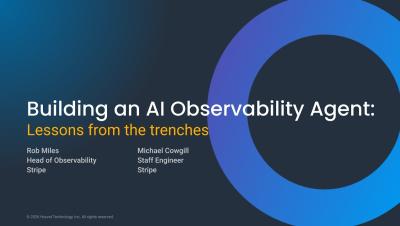
Building an AI Observability Agent: Lessons from the Trenches - Stripe at O11yCon 2026

Stripe shares lessons from building an incident investigation agent, from context-window blowups to why the final 5% still needs a human. In this O11yCon 2026 talk, they dig into what it takes to go from 'it works' to 'it works reliably,' including how pointing agents at like Honeycomb's speeds up on-call investigations.

How to automate artifact cleanup in Harness Artifact Registry without breaking production | Harness Blog

AI is changing artifact management in two ways at once. Every AI-generated pull request, dependency update, and automated build creates more container images, packages, and Helm charts than ever before. Registries are growing faster than engineering teams can manage them, driving up storage costs and leaving thousands of stale artifacts behind. At the same time, the cost of deleting the wrong artifact has never been higher.