Operations | Monitoring | ITSM | DevOps | Cloud

The latest News and Information on Containers, Kubernetes, Docker and related technologies.

Getting Started with Kubernetes using MicroK8s

Single-node deployments of Kubernetes are more common than what one would expect. In some scenarios, single-node clusters make much more sense. For development purposes or testing, there’s no need to deploy a full-blown production-grade cluster. Single-node deployments are also handy for appliances and IoT applications since they have a much smaller footprint. Enter MicroK8s, a tool by Canonical that enables you to easily deploy a lightweight single-node cluster in your local environment.

Kubernetes Master Class: RKE under the Hood

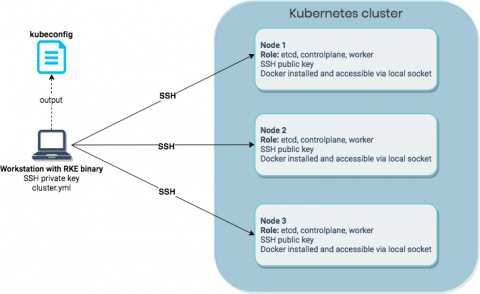
In this Kubernetes Master Class, Rancher Engineers Hussein Galal and Sebastiaan van Steenis will explore how RKE was designed, the internals of how RKE works, and how Rancher and RKE work together. This session is suited for anyone who wants to learn more about what happens under the hood when you either use Rancher or RKE to provision and maintain clusters.

Cloud Native CI/CD: How Engineering Teams Accelerate with Kubernetes, Docker, and Codefresh

Is your organization is looking to embrace containerization and microservices? In this webinar, you will learn how Kubernetes manages container-based applications and their associated networking and storage components. You will also learn about the evolving Kubernetes ecosystem, which includes components such as Helm charts, Istio, etc.

Codefresh vs. GitlabCI

If you have selected Gitlab as your git provider, you may automatically think about selecting GitlabCI as your CI/CD solution as well. Using the same vendor for source control and CI/CD might seem natural, but is not always the best combination. In fact, choosing a “good-enough” option just because it is part of the same solution is unwise in the long run if it doesn’t cover your needs.

Running and Deploying Elasticsearch on Kubernetes

Big data, AI, machine learning, and numerous others are all buzzwords we seem to throw around lightly in recent years. Even though they are hugely different from one another, they all have one thing in common. Data! Huge amounts of data that need to be managed. The downside of that is that the more data you have the more of a headache it is to store, query, and make sense of.

Using Multi stage Docker, Go, Java,& Bazel to DESTROY Long Build Times

Those long build times are EMBARRASSING! In this EPIC click-batey talk, we’ll open up our toolbox to optimize build times down to nothing. Multi-stage Docker will be critical but so will Bazel, Go, and yes, even Java. No matter what kind of environment you’re running, you’ll find some best practices to speed up your times, scratch that, you’ll DESTROY those AWFUL build times with DEVOPS and CI TOOLS.

Why you should be using Multi-Stage Docker Builds in 2019 (EU Time Zones)

Docker multi-stage builds were announced 2 years ago, but sadly not all developers are using them. Using multi-stage builds can result in a much more secure and smaller Docker image. In some cases, you can take a Docker image from 700MB to 20MB, which makes a big difference in the context of CI/CD. In this webinar, we will see how to use multi-stage Docker builds and the best practices around them.