Introduction to Docker
An introduction to Docker for anyone who wants to know a bit more about what Docker is, what the big deal is about containers and why Docker matters.


The latest News and Information on Containers, Kubernetes, Docker and related technologies.
In this blog, we will explore suspicious file activity inside a container and see how to effectively implement a file integrity monitoring (FIM) workflow. We’ll also cover how Sysdig Secure can help you implement FIM for both containers and Linux hosts.
In Kubernetes, Ingress objects define rules for how to route a client’s request to a specific service running inside your cluster. These rules can take into account the unique aspects of an incoming HTTP message, including its Host header and the URL path, allowing you to send traffic to one service or another using data discovered in the request itself. That means you can use Ingress objects to define routing for many different applications.
This article will focus on using fluentd and ElasticSearch (ES) to log for Kubernetes (k8s). This article contains useful information about microservices architecture, containers, and logging. Additionally, we have shared code and concise explanations on how to implement it, so that you can use it when you start logging in your own apps. Useful Terminology.
Many enterprises have already adopted Kubernetes or have a Kubernetes migration plan in place, making it clear that the platform is here to stay. While it provides a lot of benefits to its users, to take advantage of them, you need to thoroughly learn Kubernetes and how it works in production. Typically, the most difficult aspects of Kubernetes are learned through experience solving real-world problems.
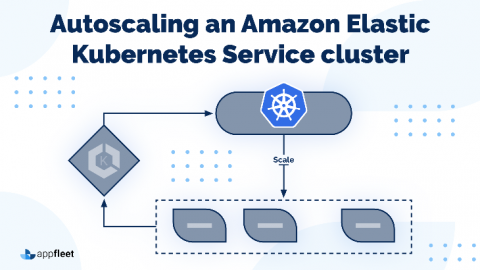
In this article we are going to consider the two most common methods for Autoscaling in EKS cluster: The Horizontal Pod Autoscaler or HPA is a Kubernetes component that automatically scales your service based on metrics such as CPU utilization or others, as defined through the Kubernetes metric server. The HPA scales the pods in either a deployment or replica set, and is implemented as a Kubernetes API resource and a controller.