Operations | Monitoring | ITSM | DevOps | Cloud

The latest News and Information on Containers, Kubernetes, Docker and related technologies.

How to Monitor Kubernetes Applications

Software companies large and small are embracing microservices as a superior approach to application development and management, compared to the earlier monolithic model. These software teams tend to reach out for containerization as their preferred way of packaging and shipping applications. Containers provide a lightweight encapsulation of any application, whether it is a traditional monolith or a modular microservice.

Troubleshooting Kubernetes Networking with Calico

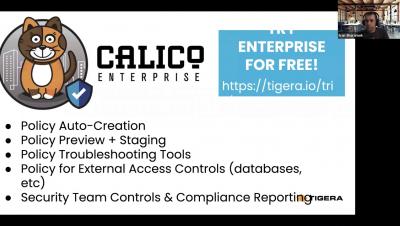
Troubleshooting connectivity problems in distributed networks is difficult enough, but doing it in a Kubernetes environment is even more challenging. However, there are tools in Calico that can ease the burden and speed problem resolution. Join this session that discusses the components that makeup Calico and best practices for troubleshooting connectivity problems in your Kubernetes cluster when things go wrong.

Introducing Rancher on NetApp HCI: Hybrid Cloud Multicluster Kubernetes Management with Push-Button Ease

If you’re like me and have been watching the odd purchasing trends due to the pandemic, you probably remember when all the hair clippers were sold out — and then flour and yeast. Most recently, you might have seen this headline: Tupperware profits and shares soar as more people are eating at home during the pandemic. Tupperware is finally having its day. But a Tupperware stacking strategy is probably not why you’re here.

Full Steam Ahead! D2iQ Konvoy 1.6 and D2iQ Kommander 1.2 are GA!

The latest versions of Konvoy and Kommander are now available, continuing the rapid progress and relentless innovation that has characterized the D2iQ Kubernetes Platform (DKP) from its inception. We are also updating our integrated GitOps capabilities, and streamlining their integration with DKP to improve both developer and operator experiences and remove friction from the development and deployment pipelines.

How to deploy the Elastic Stack on Red Hat OpenShift with ECK

Managing hundreds or thousands of containers has quickly become the standard for many organizations. With infrastructures growing more complex, we want every user to find value with Elastic (regardless of where or how they operate). We created Elastic Cloud on Kubernetes (ECK) — the official Operator — to simplify setup, upgrades, scaling, and more for running Elasticsearch and Kibana on Kubernetes.

Distribute ROS 2 across machines with MicroK8s

Our simple ROS 2 talker and listener setup runs well on a single Kubernetes node, now let’s distribute it out across multiple computers. This article builds upon our simple ROS 2 talker / listener setup by running it on multiple K8s nodes. At the completion of this setup expect to have a ROS2 Kubernetes cluster running MicroK8s on three different machines. Applying a single configuration file distributes the ROS 2 workload across the machines.

Announcing LogDNA Agent v2.2 Beta

We’re excited to announce the public beta release of our latest Agent v2, which includes two major feature improvements for our Kubernetes® customers. First, Agent v2.2 now supports Kubernetes event logs that enable more seamless Kubernetes deployment troubleshooting. In addition, we now support running Agent v2 as a non-root user, making Agent v2 the most secure Kubernetes agent on the market.

Sysdig extends image scanning to Google Cloud's Artifact Registry

In support of modern application development built on CI/CD, containers and open source, Google Cloud launched Artifact Registry (now generally available), a new artifact management solution. Sysdig helps DevOps teams using Artifact Registry confidently secure the build pipeline with comprehensive image scanning that identifies container vulnerabilities and misconfigurations to reduce risk.

Creating Temporary Preview Environments Based On Pull Requests With Argo CD And Codefresh

Creating preview environments as a result of making pull requests is one of those practices that have vast potential and are yet largely overlooked. There is a strong chance that you are not using them, even though they can drastically increase productivity. I will not explain what preview environments are, besides stating that they are temporary environments created when pull requests are made and destroyed when PRs are closed.