Operations | Monitoring | ITSM | DevOps | Cloud

The latest News and Information on Containers, Kubernetes, Docker and related technologies.

Highly available Kubernetes in IoT: MicroK8s on RaspberryPi

Learn how to set up a Pi-Hole instance with a single command and a cluster of Raspberry Pis on MicroK8s. High availability, load balancing and Kubernetes configuration included. The Raspberry Pi 4 brings the graphics, RAM and connectivity needed for a Linux workstation, so why not use a cluster to set up your own Pi-Hole, the open source network-level ad blocker that acts as a DNS sinkhole or DHCP server.

Fresh Springtime Product Updates: D2iQ Kommander 1.4 and D2iQ Konvoy 1.8 Are GA!

It’s that time again: the latest versions of D2iQ Konvoy and D2iQ Kommander have just been made generally available and the D2iQ Kubernetes Platform (DKP) has some powerful new features. As noted with our last update, DKP is the leading independent Kubernetes platform for enterprise grade production at scale and Konvoy and Kommander are the reason why. You can learn more about Konvoy here, Kommander here, and our general approach here.

Application Layer Observability | Tigera - Long

The majority of operational problems inherent to deploying microservices in a distributed architecture are linked to two areas: networking and observability. At the application layer (Layer 7), the need to understand all aspects associated with service-to-service communication within the cluster becomes paramount. Service-to-service network traffic at this layer is often using HTTP. DevOps teams struggle with these questions: Where is monitoring needed? How can I understand the impact of issues and effectively troubleshoot? And how can I effectively protect application-layer data?

DNS Dashboard | Tigera - Long

While it’s an essential part of Kubernetes, DNS is also a common source of outages and issues in Kubernetes clusters. Debugging and troubleshooting DNS issues in Kubernetes environments is not a trivial task given the limited amount of information Kubernetes provides for DNS queries. The DNS Dashboard in Calico Enterprise and Calico CLoud helps Kubernetes teams more quickly confirm or eliminate DNS as the root cause for microservice and application connectivity issues.

Kubernetes: Weighing Advantages and Disadvantages

Kubernetes is one of the current leading technologies. Its adoption has seen tremendous growth in the past few years. The concept of containers is a paradigm that appears to be the predominant medium of software development and deployment in the coming future. Containers help maintain consistency across various platforms, as they pack an application with its dependencies to help move it from one platform to another.

Launching Argo CD Autopilot: An Opinionated Way to Manage Your Applications Across Environments Using Gitops at Scale

Argo CD has been skyrocketing in popularity with the CNCF China survey naming Argo as a top CI/CD tool for its power as a deployment automation tool. And it’s no wonder, GitOps is a faster, safer, and more scalable way to do continuous delivery. Most of our own users are embracing GitOps to manage infrastructure and applications at scale in gaming, finance, defense, media, and other industries.

Calico Enterprise enables live view of cloud-native apps deployed in Kubernetes

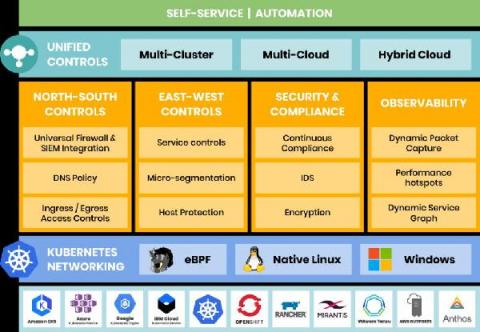
We are happy to announce that the latest release of Calico Enterprise delivers unprecedented levels of Kubernetes observability! Calico Enterprise 3.5 provides full-stack observability across the entire Kubernetes environment, from application layer to networking layer. With this new release, developers, DevOps, SREs, and platform owners get: For more information, see our official press release.

Civo official launch!

Countdown to our official production launch! We'll be giving you a behind the scenes look at how we build and provision a new CivoStack region - our custom Kubernetes platform based on K3s. Including a specially recorded time-lapse build of our latest location. Featuring an introduction from our CEO Mark Boost, and Director of Innovation Dinesh Majrekar who will run you through our zero-touch region configuration.

Securing AWS Fargate workloads: Meeting File Integrity Monitoring (FIM) requirements

Securing AWS Fargate serverless workloads can be tricky as AWS does not provide much detail about the internal workings. After all… it’s not your business, AWS manages the scaling of underlying resources for you. :) While the security and stability of Fargate’s system is an inherent feature, Fargate follows a shared responsibility model, where you still have to take care of securing those parts specific to your application..