Why the creators of K3ai use Civo Kubernetes
Alessandro Festa, Sr. PM on AI @SUSE shares how K3ai makes use of Civo’s speed & simplicity. We also spoke about the challenges that Civo helps them overcome.


The latest News and Information on Containers, Kubernetes, Docker and related technologies.
Monitoring cloud-native systems is hard. You’ve got highly distributed apps spanning tens and hundreds of nodes, services and instances. You’ve got additional layers and dimensions—not just bare metal and OS, but also node, pod, namespace, deployment version, Kubernetes’ control plane and more. To make things more interesting, any typical system these days uses many third-party frameworks, whether open source or cloud services.
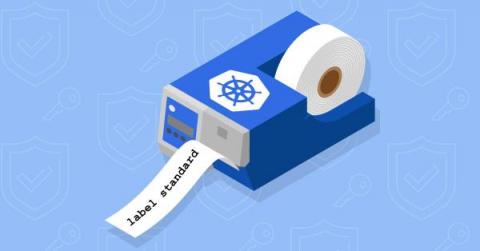
In this blog post, I will be talking about label standard and best practices for Kubernetes security. This is a common area where I see organizations struggle to define the set of labels required to meet their security requirements. My advice is to always start with a hierarchical security design that is capable of achieving your enterprise security and compliance requirements, then define your label standard in alignment with your design.
October marks the five-year anniversary of Calico Open Source, the most widely adopted solution for container networking and security. Calico Open Source was born out of Project Calico, an open-source project with an active development and user community, and has grown to power 1.5M+ nodes daily across 166 countries. When Calico was introduced 5 years ago, the world—and technology—was much different from what it is today.
Heaven knows we all could use some luck these days, and observability may be just the thing we need. But observability isn’t luck, and it isn’t really new either. A few people even know that observability is an aspect of control theory, which dates back to the 1800s! In this blog post, I’ll cover some of the history of observability vs.
I am super excited to announce that we have released our "clone environment" feature. It is a massive update!! With one click, you can duplicate an existing environment. The cloning environment has been a significant feature expected by our customers and users for a long time. Thanks to our beta testers and our team for making it live for everyone. Here is a short video showing the clone environment in action
The benefits of containerizing workloads are numerous and proven. But, during infrastructure transformations, organizations are experiencing common, consistent challenges that interfere with accurately forecasting the costs for hosting workloads in Kubernetes. Planning the proper reservations for CPU and memory before migrating to containers is a persistent issue Densify observes across our customers.