Operations | Monitoring | ITSM | DevOps | Cloud

New Citrix Application Delivery Controller Management Pack released

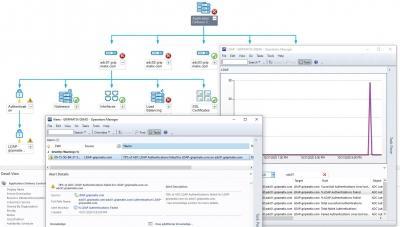
We are happy to announce that our new SCOM Management Pack for monitoring Citrix Application Delivery Controller (ADC) instances has been released today! Citrix ADC was previously called 'Netscaler'. With more than 150 monitors and rules, organizations that use Citrix ADC to provide remote access to their employees are now able to insure Remote Work Availability and Performance at all times with SCOM. The MP has become part of our Citrix Ready MetrixInsight for CVAD subscription offering.

Citrix NetScaler ADM for Virtual App and Desktop Performance Management

Citrix Application Delivery Management (ADM) – previously called as Citrix NetScaler Management and Analytics System (MAS) – is a centralized management solution that provides administrators with the ability to manage and monitor Citrix application networking products from a single, unified console. Citrix ADM includes a number of modules including Web Insight, HDX Insight, Gateway Insight, Security Insight, SSL Insight, TCP Insight, Video Insight, and WAN Insight.

10 Common Issues You Could Experience When Using Citrix Cloud

There are an increasing number of organizations, who are moving their Virtual Apps and Desktops deployments to Citrix Cloud by using the Virtual Apps and Desktops service. Citrix Cloud allows you to host components such as your core management layer for a Virtual Apps and Desktops deployment in the cloud, managed and kept up to date by Citrix.

Evaluating Deployment Options for Citrix Cloud

I recently published an article around the Virtual Apps and Desktops service, a Citrix Cloud offering that allows customers to host backend Virtual Apps and Desktops management components in the cloud. With Citrix Cloud, while the VDAs remain in the customer’s network / control, the control plane is hosted by Citrix and managed by them. There are several advantages of Citrix Cloud.

7 Myths of Citrix Performance Monitoring

Citrix digital workspaces are one of the most performance sensitive technologies being deployed in enterprise networks today. This is due to several reasons: All of this means that if there is a slight glitch in the network, in the Citrix servers, or the applications being accessed, this can result in poor performance for users. In this blog, we review some of the most common myths about Citrix performance monitoring that we have encountered.

Deploying Citrix ADC with Service Mesh on Rancher

As a network of microservices changes and grows, the interactions between them can be difficult to manage and understand. That’s why it’s handy to have a service mesh as a separate infrastructure layer. A service mesh is an approach to solving microservices at scale. It handles routing and terminating traffic, monitoring and tracing, service delivery and routing, load balancing, circuit breaking and mutual authentication.

Monitoring for Citrix Digital Workspaces

eG Innovations has been a Citrix partner since 2003. Those were the days when Citrix’s messaging was around “access”. Thin client computing and then server-based computing were the hot topics. Discussions around the efficiency of RDP and ICA ruled and Citrix Resource Manager was the best way to monitor a Citrix server. What was then Citrix MetaFrame soon became Citrix Presentation Server, then Citrix XenApp, and now Citrix Virtual Apps.

Monitoring Citrix Real Time User Experience: See What Performance Your Users Are Getting

User experience is the biggest and most important factor in determining the success of Citrix rollout in an organization. When end-users are happy with their virtualized applications and desktops, then everything is hunky dory and Citrix admins can focus on operations and maintenance.

Bringing Cloud Load Balancer On-Prem with Rancher

The public cloud offers great scalability and flexibility for customers and is a model where service providers make many decisions on their behalf. For example, in cloud service providers like Google Cloud Platform (GCP), Amazon Web Service (AWS) or Microsoft Azure, a cloud load balancer is spun up on demand. The load balancer gets an IP address automatically and your application is ready to be served.