
Operations | Monitoring | ITSM | DevOps | Cloud

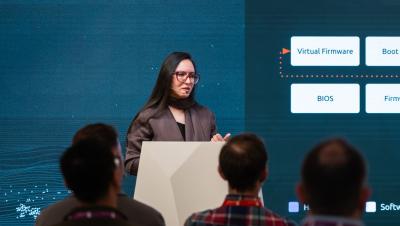
Open source is not enough: Why you need attestation | Ubuntu Summit 26.10

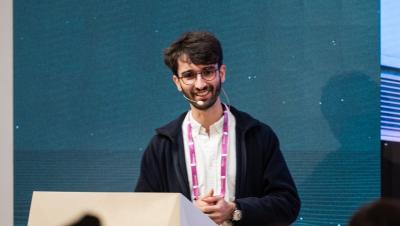
We called it the personal computer (PC), but modern software is anything but personal, forcing users into rigid workflows while vendors retain control. Nobody should be dependent on tools they don’t truly own. In this talk, Kaye introduces Any: an open ecosystem designed to make software personal. He breaks down how offline sync, end-to-end encryption, and sandboxed code deployment pave the way towards a new kind of application that you can trust and depend on.
Aiven Studio Live Stream | Day 1 | Slush 2026 - Live from Helsinki

Welcome to Aiven Studio, streamed live from Slush 2026 on Nov 18–19. Tune in to listen to our interviews Agenda (EET timezone): AIVEN DATA PLATFORM The Aiven Platform is more than a collection of open source services for streaming, storing and analyzing data. The platform ensures that all services run reliably and securely in the clouds of your choice, are observable, and can easily be integrated with each other and with external 3rd party tools.

Apache Artemis vs. Apache ActiveMQ Classic vs. RabbitMQ: Inside meshIQ's 2026 Messaging Broker Benchmark

Which open source message broker is fastest? According to the people who built and reviewed meshIQ's 2026 benchmark of Apache Artemis, Apache ActiveMQ Classic and RabbitMQ, that is the wrong question. Each broker leads under different conditions, and the same broker can perform very differently depending on the client, protocol and configuration you use.

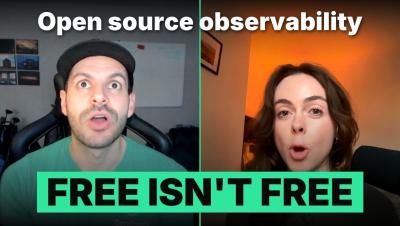
Is open source observability really free for AI agents?

Open source observability stacks answer simple questions with very few tokens. But what happened when the questions got harder? In episode 3 of our benchmarks series, Chris and Annie compare Coralogix with ClickHouse, OpenSearch, and Loki, Tempo and Prometheus when an agent has to keep going until it gets the right answer. They cover time and tokens per question, how long an agent took to set up each stack, and a new metric: value per token.

Astra: An open source observatory control software for exoplanet hunting | Ubuntu Summit 26.10

Robotic and autonomous observatories are critical for modern time-domain and high-cadence astronomical surveys, like exoplanet transit searches. The operation of these facilities requires complex software coordination to manage hardware, schedule observations, and ensure safety. However, existing survey-focused observatory control software is often proprietary and platform-locked.

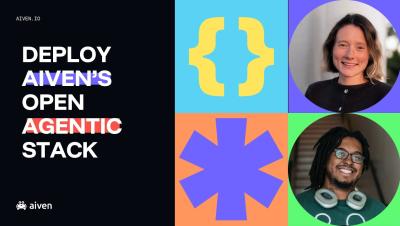
Deploy Aiven's Open Agentic Stack

Running AI agents in production takes more than a model and a prompt. In this live workshop, Jay Miller (Staff Product Advocate, Aiven) and Cara Baestlein (Director of Product, Apps, Aiven) deploy Aiven’s Open Agentic Stack step by step: an AI gateway, deployed agents, workflow orchestration and LLM observability, all running on Aiven Runtime next to your data. WHAT YOU’LL LEARN.

Working in the open source community

Hear Josep Prat - Senior Engineering Director at Aiven explain how our engineers work with the community to move Apache Kafka forward, and how open source matters to him. AIVEN DATA PLATFORM The Aiven Platform is more than a collection of open source services for streaming, storing and analyzing data. The platform ensures that all services run reliably and securely in the clouds of your choice, are observable, and can easily be integrated with each other and with external 3rd party tools.

The Top 12+ Open Source Monitoring Tools in 2026.

Open source website monitoring tools give organizations greater control over how they monitor websites, servers, applications, and infrastructure. They can reduce licensing costs, offer extensive customization, and integrate with existing workflows, but they also require more time to deploy, maintain, and scale than managed alternatives. We’ll compare some of the best open source website monitoring tools available today, from lightweight uptime monitors to enterprise-grade observability platforms.

Can you ban an idea? What we learned about open source at Civo Navigate London 2026

More and more, we are hearing how artificial intelligence is transforming how we build, secure, and share software. But as AI models become more powerful, questions around openness, security, and digital sovereignty are becoming harder to ignore. Can open models really be controlled? Is AI putting open-source communities under pressure? What does genuine technological independence look like? And who decides who gets access?