Operations | Monitoring | ITSM | DevOps | Cloud

Predicting and Preventing Crime with Machine Learning - Part 2

In the first part of this blog series, we presented a use case on how machine learning can help to improve police operations. The use case demonstrates how operational planning can be optimized by means of machine learning techniques using a crime dataset of Chicago. However, this isn’t the only way to predict and prevent crime. Our next example takes us to London to have a look at what NCCGroup’s Paul McDonough and Shashank Raina have worked on.

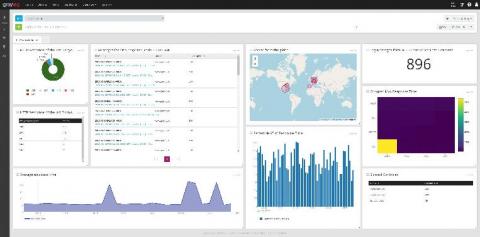
Announcing Graylog 3.2

This release unifies views, dashboards, and search for a more flexible and comprehensive approach to threat hunting. The expanded search introduces greater efficiency by making it easier to reuse searches you need to run on a regular basis with saved search and search workflows. Other enhancements such as full screen dashboards, and updates to alerting round out v3.2.

What Happens When User Research Meets Database Development

Fast-growing products are not overnight successes contrary to what you often hear. At InfluxData, we’re on a mission to build a user base from scratch with our new flagship product InfluxDB Cloud. Every new user has to go through a signup flow to create their account. So it must go as smoothly as possible. User research and design experimentation are the way we’ll reach this goal, and the main ingredient in this recipe is you: the community member.

Automate all the things: Terraform + Ansible + Elastic Cloud Enterprise

A sequel to our first post, Automating the installation of Elastic Cloud Enterprise with Ansible, this blog shows how to extend automation to cloud provisioning with Terraform. In the first post, we detailed how to deploy and configure Elastic Cloud Enterprise (ECE) across three availability zones in AWS using Ansible. However, the provisioning of the underlying EC2 instances and configuration of the security groups was all manual.

Elastic Common Schema .NET library and integrations released

The Elastic Common Schema (ECS) defines a common set of fields for ingesting data into Elasticsearch. A common schema helps you correlate data from sources like logs and metrics or IT operations analytics and security analytics. Further information on ECS can be found in the official Elastic documentation, GitHub repository, or the Introducing Elastic Common Schema article.

High availability Elasticsearch on Kubernetes with ECK and GKE

Elastic Cloud on Kubernetes (ECK) is an operator that allows you to automate the deployment of the Elastic Stack — including Elasticsearch, Kibana, and Elastic APM, Elastic SIEM, and more — using Kubernetes. By using this ECK, you can quickly and easily deploy Elasticsearch clusters with Kubernetes, as well as secure and upgrade your Elasticsearch clusters. It is the only official Elasticsearch operator.