Operations | Monitoring | ITSM | DevOps | Cloud

Latest posts

How Sleuth measures Mean Time to Recovery (MTTR)

The DORA metric Mean Time to Recovery (MTTR) tracks how long on average your failure spans are. In this video, Sleuth CTO Don Brown explains how Sleuth calculates this measurement, which gives you insight on how quickly your team can respond to and recover from failure. Check out these videos on how Sleuth measures other DORA metrics: Give Sleuth a try and see why it's a deploy-based Accelerate / DORA metrics tracker both managers and developers love.

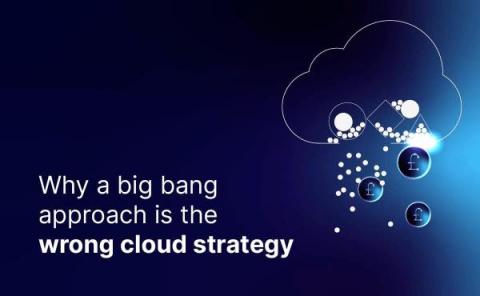
Why a big bang approach is the wrong cloud strategy

Despite all the hype from the big cloud providers the truth is that most organisations rely on hybrid infrastructures now and will do so for the foreseeable future. Typically, this includes on-premises infrastructure and at least two public cloud providers. This is not a step on a journey to being 100 per cent cloud, it is the strategic destination many have chosen.

Tigera: Calico Installation - Best Practices

There are multiple ways to install Calico, such as manifest and helm. However, the recommended way is to install Calico through the free/opensource Tigera-Operator. In this session, we will talk about some basic Kubernetes networking concepts and take a look at some of the Tigera-opreator features and explore how you can use the power of the operator to maintain/upgrade and improve Calico and your cluster security.

Tigera: Hands-on workshop: Implementing Security and Observability for Containers and Kubernetes

Attend this in-depth, hands-on workshop with a Calico expert to design and implement container security and zero-trust workload security for your containerized workloads running in self-managed Kubernetes on Amazon Web Services (AWS), Microsoft Azure, Red Hat Openshift or Suse Rancher RKE. The 90-minute interactive lab comes with your own provisioned Calico Cloud environment and is designed to provide more complete knowledge on.

Tigera: Microsoft Azure: Hands-on workshop Implementing Container Security on AKS

Attend this in-depth, hands-on AKS focused workshop with a Microsoft Azure and Calico expert to learn how to detect and manage vulnerabilities and mitigate risks from security threats during the build and run time in AKS. The 90-minute interactive lab comes with your own provisioned Calico Cloud environment and is designed to help: We have limited the number of participants for this workshop to ensure that each participant can receive adequate attention.

Pulseway Has Evolved Series - See the Latest Releases and Updates

In our next quarterly product update webinar we will recap new Pulseway RMM features introduced in the past few months, highlight the most recent enhancements (including how they can be used) as well as previewing what is coming next. Join us on August 10th and we will learn about: There will also be an opportunity to ask questions.

Autoscale your Kubernetes workloads with any Datadog metric

Editor’s note: This post was updated on August 9, 2022, to include a demonstration of how to enable highly available support for HPA. It was also updated on November 12, 2020, to include a demonstration of how to autoscale Kubernetes workloads based on custom Datadog queries using the new DatadogMetric CRD.

Monitoring Rails applications with Datadog

Rails is a Ruby framework for developing web applications. It favors the Model-View-Controller (MVC) architecture and includes generators that create the files needed for each MVC component. Rails applications consist of a database, an application server for running application code, and a web server for processing requests. Rails provides multiple integrations for its supporting database (e.g., MySQL and PostgreSQL) and web server (e.g., Apache and NGINX).

Why AIOps may be necessary for the future of engineering

Machine learning has crossed the chasm. In 2020, McKinsey found that out of 2,395 companies surveyed, 50% had an ongoing investment in machine learning. By 2030, machine learning is predicted to deliver around $13 trillion. Before long, a good understanding of machine learning (ML) will be a central requirement in any technical strategy. The question is — what role is artificial intelligence (AI) going to play in engineering?