Operations | Monitoring | ITSM | DevOps | Cloud

Building Real-Time Data Pipelines with Kafka, Telegraf, and InfluxDB 3

When milliseconds matter and data never stops flowing, you need a pipeline that can handle high-velocity streaming data with reliability and scale. The modern streaming stack of Kafka, Telegraf, and InfluxDB 3 Core delivers exactly that. To give you a concrete example, this blog works with a fictitious use case: “Papa Giuseppe’s Pizzeria.” Every oven, prep station, and order in this pizza restaurant generates data. Our workflow looks like this.

Understanding Linux Vulnerabilities and Their Impact

Understanding Linux Vulnerabilities and Their Impact Linux vulnerabilities pose significant risks, particularly CVE 20258067, which has active exploits in rebased distributions. CVE 202332256 enables remote attackers to access sensitive information without authentication. Additionally, CVE 202558367 presents a denial of service and remote code execution risk in the Delta class. Applications handling untrusted user input to Delta need careful scrutiny, and it is crucial to keep systems updated to mitigate these threats.

Seamlessly Migrating 15k Redis servers to Valkey

For many years Redis has been the default for caching, message queues, and fast data storage. However recent changes to its licensing mean that companies who want truly open-source tools need to make a switch. This is why Valkey was created. We are leading the way in offering a smooth path to move your current Redis setups to a fully open-source managed Valkey service.

Meet Rovo Chat in Bitbucket: your AI-powered teammate

We’re excited to announce that we are starting a phased rollout of Rovo Chat in Bitbucket Cloud today! It will be available to 100% of users by September 30th, 2025. To check if it’s available on your account, look for the Rovo Chat button in your top navigation. Rovo is Atlassian’s AI-powered teammate that helps you find what matters, learn faster, and take action right in your workflow.

Beyond Automation: The Rise of Agentic Networks

Agentic AI is the next evolution in network management, moving beyond simple automation to intelligent systems that can reason, plan, and act autonomously. Justin Ryburn, Kentik Field CTO, highlights how this shift automates expertise, enables proactive problem-solving, and empowers human engineers for strategic innovation.

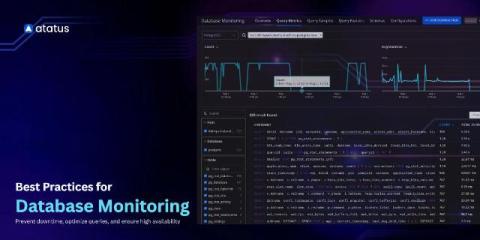
10 Best Practices for Proactive Database Performance Monitoring to Prevent Downtime

Databases are the core of modern applications, whether it is an e-commerce platform, a banking system, or a social media app. Slow database performance or unexpected downtime can cause serious problems, from lost revenue to poor customer experience. Proactive database performance monitoring helps teams identify issues before they escalate. Unlike reactive monitoring, which only addresses problems after they occur, proactive monitoring ensures your database remains fast, stable, and reliable.

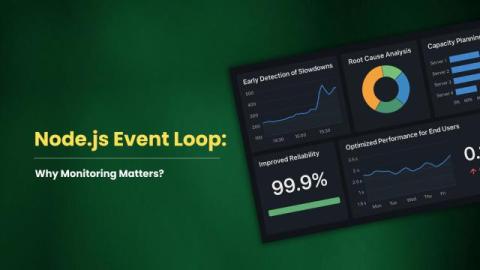
Node.js Event Loop: Why Monitoring Matters

Node.js has become a cornerstone for modern application development because of its non-blocking and asynchronous architecture. According to Stack Overflow Developer Survey, Node.js remains among the most widely used technologies for web applications, powering millions of services globally. While this event-driven model provides scalability and efficiency, it also introduces challenges.

InfluxDB 3 Enterprise: Deploy Your Way, Scale on Demand

InfluxDB 3 Enterprise is engineered for performance and designed for flexibility, delivering high-scale, production-ready time series data management with operational simplicity. InfluxDB 3 Enterprise is built on a cloud-native, diskless architecture that removes the limits of traditional storage. It’s easy to deploy, scales effortlessly, and eliminates the complexity of managing clusters so you can deploy your way and meet the unique demands of your environment.

Introducing Chunk: The agent that validates code at AI speed

The software development landscape has fundamentally shifted. Teams are shipping more value faster than ever, leveraging AI to generate code at unprecedented speed. But with this velocity comes equally dramatic complexity — small teams now face challenges that once belonged only to large organizations, while large organizations grapple with codebases that strain human comprehension. This complexity isn’t a bug — it’s a productivity opportunity to embrace.