Operations | Monitoring | ITSM | DevOps | Cloud

Elastic on Elastic: Embracing our own technology

When making investments in our tech stack, we tend to have doubts about companies that don’t use their own products and services. At Elastic, we deploy the full suite of our technology across the enterprise. We do so because our technology not only works, but it makes us more efficient and flexible on so many levels. And it can do the same for you and your business, too.

How To Get The Most Out Of The Linux Screen Command

If you’re logging onto a service or running remote command line operations over a network link via the Secure Shell (SSH) protocol, the last thing you need is for your session to be cut off by a faulty connection. This scenario is all too common – but for Linux users, the Screen utility can prevent it from occurring.

DevOps Metrics: 7 KPIs to Evaluate Your Team's Maturity

Measuring the maturity of your DevOps team might sound difficult, but it isn’t at all. Simple key performance indicators (KPIs), such as the deployment success rate or mean time between failure, give a good indication of the maturity of your DevOps team. By “mature,” I mean that your team consistently and smoothly operates at a high level and can deploy several times a day with very little risk.

Creating a Custom Container for the Deep Learning Toolkit: Splunk + Rapids.ai

The Deep Learning Toolkit (DLTK) was launched at .conf19 with the intention of helping customers leverage additional Deep Learning frameworks as part of their machine learning workflows. The app ships with four separate containers: Tensorflow 2.0 - CPU, Tensorflow 2.0 GPU, Pytorch and SpaCy. All of the containers provide a base install of Jupyter Lab & Tensorboard to help customers develop and create neural nets or custom algorithms.

Best Practices for Using Splunk Workload Management

Workload management is a powerful Splunk Enterprise feature that allows you to assign system resources to Splunk workloads based on business priorities. In this blog, I will describe four best practices for using workload management. If you want to refresh your knowledge about this feature or use cases that it solves, please read through our recent series of workload management blogs — part 1, part 2, and part 3.

The Daily Telegraf: Getting Started with Telegraf and Splunk

In this blog post, we discuss using Telegraf as your core metrics collection platform with the Splunk App for Infrastructure (SAI) version 2.0, the latest version of Splunk’s infrastructure monitoring app that was recently announced at Splunk .conf19. This blog post assumes you already have some familiarity with Telegraf and Splunk. We provided steps and examples to make sense of everything along the way, and there are also links to resources for more advanced workflows and considerations.

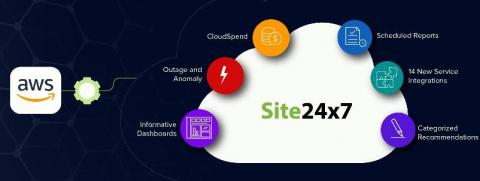
AWS: How did we monitor the cloud in 2019?

We had a busy 2019 with a substantial number of Amazon Web Service (AWS) integrations into Site24x7, each providing a seamless monitoring experience for our customers. The increasing number of paid AWS monitors is proof that we enhanced the monitoring expectations in 2019. In case you missed any updates about the AWS monitoring platform, here's a year-end review.

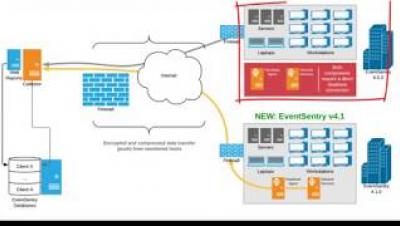
New features in EventSentry v4.1

Brief overview of all new features in v4.1, including NetFlow malicious traffic detection, enhanced performance monitoring via command line output capture, Active Directory password reminder emails, BitLocker, Pending Reboot & battery detection, lots of visual & functional improvements to the web reports and more!