Operations | Monitoring | ITSM | DevOps | Cloud

Remote Infrastructure Management: How to Run Sites With No IT Staff

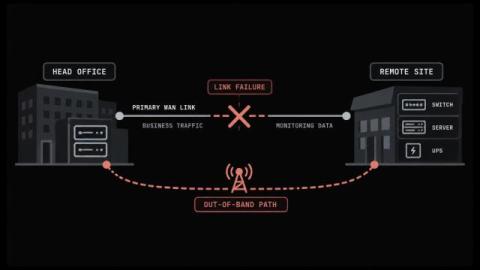
Most IT teams now look after more sites than they have people to visit. Remote infrastructure management covers that gap, and it works differently from the IT infrastructure management you run inside a building where somebody can walk over and look at whatever broke. The technology rarely causes the trouble. Trouble starts when a site goes quiet and there's nobody standing there to look at it.

10 Best Database Monitoring Tools for 2026

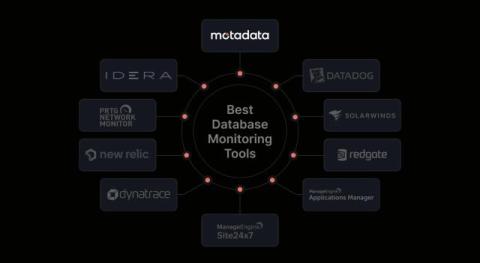
If your company relies on multiple databases and applications, keeping track of database performance can become difficult. You may face challenges such as: As your database environment grows, identifying the cause of performance issues becomes harder without the right monitoring in place. I get why database monitoring tools have become an important part of managing database performance. They help you monitor database activity, spot performance issues, and find what is causing a slowdown.

Run your first workflow in minutes, no sales call

The regression nobody catches passes a busy review and ships. An off-by-one, a change that reads as sensible and quietly breaks something, gets a nod from a tired reviewer and lands in production, where it erodes trust one small defect at a time. You can have an AI code reviewer running on your own repository in the time it takes to read this page. Get started without having to book a demo or contact sales.

AI Agent Context Explained: What Agents Can't See in Your Infrastructure

The "C" word is a controversial subject in the US, but we have to talk about "context", and what it means to an AI Agent. For starters, agents can only act on what's in their context window. Everything outside of it is a guess. In application code that limit is usually an annoyance.

The Data Race That Wasn't a Bug (and the One That Was)

Imagine this: you are testing the performance of some part of your application. Everything is going smoothly, the numbers look good, and as a last check you turn on Go’s race detector. Then, out of nowhere, it prints a warning you didn’t expect: So you look at it. You look at it again, and again, and you think: “What the…?” The race is between your code and a goroutine you never started, somewhere deep inside net/http. You have no idea how that is possible, or why.

Why We Built the Komodor Agentic Operations Platform: Q&A with CEO Ben Ofiri

Komodor spent years building an AI SRE platform before the category had a name. With the launch of the Komodor Agentic Operations Platform, it’s opening that engine up so enterprises can build, run, govern and optimize their own agents in production. Following the launch, co-founder and CEO Ben Ofiri sat down to talk about why now is the right time for agentic operations, what breaks between prototype and production, and where operations will head next.

Beyond Traditional Observability: Turning Technical Insight into Operational Intelligence

Observability has become a central part of modern IT operations and for good reason. Metrics, logs and traces give technical teams detailed evidence about how applications, infrastructure and services are behaving. Such evidence helps them investigate performance degradation, identify abnormal behavior and understand what changed around the time an issue occurred.

PostgreSQL MCP: Manage Postgres From Your AI Assistant

TL;DR Most of the time we understand the tasks we're working on, but inevitably something comes up that we don't know much about, and we need just enough skill to cope. That used to mean reading paper documentation, then searching vendor sites and the web. Now it tends to mean a dialog with an LLM that has already ingested the documentation we don't have time to find and read. That's only half the problem, though.

Building a Self-Service Knowledge Base Employees Want to Use

Most organizations already have policy documents, troubleshooting guides, knowledge articles, resolved tickets, runbooks, and internal wikis. They're not starting at zero, but despite that investment, employees continue to open tickets for questions the organization has already answered. The problem is not always a lack of knowledge. More often, employees cannot find the right information quickly enough to trust self-service as their first option.