Operations | Monitoring | ITSM | DevOps | Cloud


Tools for debugging apps on Google Kubernetes Engine
Editor’s note: This is a follow up to a recent post on how to use Cloud Logging with containerized applications running in Google Kubernetes Engine. In this post, we’ll focus on how DevOps teams can use Cloud Monitoring and Logging to find issues quickly. Running containerized apps on Google Kubernetes Engine (GKE) is a way for a DevOps team to focus on developing apps, rather than on the operational tasks required to run a secure, scalable and highly available Kubernetes cluster.
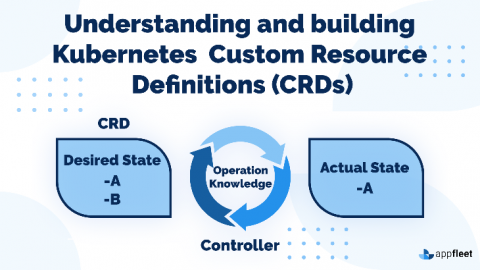
Understanding and building Kubernetes Custom Resource Definitions (CRDs)
So, let's say you had a service or application that was built on an orchestration platform such as Kubernetes. In doing so, you must also address an overflowing array of architectural issues, including security, multi-tenancy, API gateways, CLI, configuration management, and logging. Wouldn't you like to save some manpower and development time and focus on creating something unique to your problem? Well, it just so happens that your solution lies in what's called a Custom Resource Definition, or CRD.
HAProxyConf 2019 - HAProxy Go Packages Ecosystem with Marko Juraga
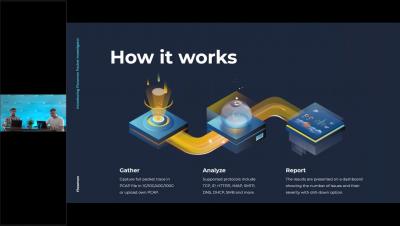
Introducing Flowmon Packet Investigator
Impact for Everyone! [Twitch]
IT Risk Assessment vs. IT Risk Management: The Difference and What They Mean to the Service Desk

Install Artifactory HA on GKE in a Flash
Installing Artifactory on GKE, or on any Kubernetes cluster for that matter, can be complex. You have to think through several scenarios, switch back and forth between UI and command line, create a lengthy Helm command, search for acceptable parameters … and so on. All this before you have to configure certificates, licenses, database settings, node settings. But there’s more, what about future proofing it?

A Smooth Operator to Run JFrog Enterprise on OpenShift
Red Hat OpenShift and JFrog Artifactory are a smooth fit together for cloud native, containerized software development at enterprise scale. With the new availability of OpenShift operators certified for JFrog Enterprise, that fit now fastens tight.

Continuous Vulnerability Management Is a Must
Face it. Your IT systems may be secure today, but what about next week? Granted, as stated by the Center for Internet Security (CIS), you and your team members must operate in a constant stream of new information—software updates, patches, security advisories, threat bulletins, and more. But as you know, attackers have access to the same information and can leverage gaps between the onset of new knowledge and remediation.