Operations | Monitoring | ITSM | DevOps | Cloud

Industrial Processing Equipment: Key Factors Before You Invest

Industrial processing equipment affects production speed, labor demand, product consistency, and operating expense. An unsuitable purchase can cause stoppages, difficult cleaning, excessive wear, or limited capacity. Yet many buyers move forward without fully understanding the conditions their equipment must handle. Taking time to evaluate a few key factors upfront can prevent costly mistakes after installation.


How to Transform Your WordPress Site Into a Learning Hub

A WordPress site can do far more than publish articles or display service pages. With careful planning, it can host structured lessons, enroll learners, track completion, issue certificates, and support paid access. That change matters for schools, coaches, clinics, and training teams that need education beyond their main content. A well-built hub gives visitors a clear path from interest to progress, while administrators gain cleaner data.

How we made vulnerability fixes review-ready with Agentic Pipelines

Routine vulnerability fixes are rarely difficult in isolation. The interruption that they cause is the problem: pick up the ticket, trace the dependency, update the package or image, regenerate files, run the checks, open the pull request, then return after deployment to close the loop. That repeated handoff was a good candidate for automation with agentic pipelines. The goal was simple: start the day with a tested pull request instead of another ticket to pick up.

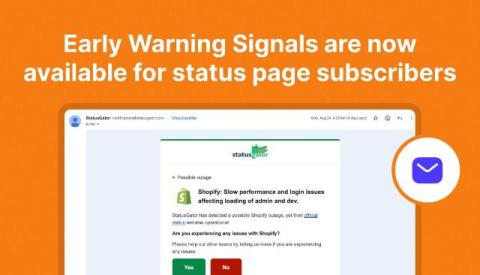
Early Warning Signals are now available for status page subscribers

Your status page subscribers can now receive Early Warning Signals in addition to regular outage alerts. Early Warning Signals is our flagship feature that detects outages before providers acknowledge them on their status pages. When we launched this feature two years ago, we had no idea how effective or beloved it would become. StatusGator now regularly detects outages at your most important providers, giving you that edge and answering the question: “Is it everyone? Or is it just me?”.

AI SRE Agent MCP Authentication by Header: Keep Keys Out of the Config

Nobody wants an API key sitting in an agent's config file on a shared server. Mike shows how AURA takes the credential off the request instead. AURA can hold your keys in its config file, but it does not have to. Mike Shearer, one of AURA's creators, walks through the alternative: AURA reads named headers off the incoming request and forwards them to the MCP servers it calls, so the credential never has to sit on disk.

AI SRE Agent Approval Workflow: Identity Forwarding to MCP Servers

Two engineers can hold the same approve button and still not be allowed to make the same change. The key riding with the approval settles it. AURA's human in the loop config gates the create_pipeline tool on the Mezmo MCP server and sends each request to a webhook for review. A mock UI stands in for the approval system here, and Mike walks through the payload schema so you can point it at your own.

AI SRE Agent ChatOps: How AURA Runs in a Slack Incident Channel

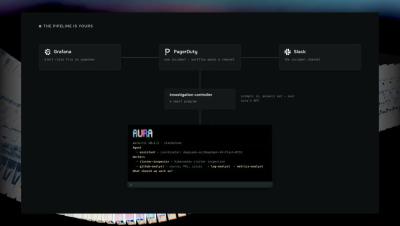
AURA runs as a standalone service and knows nothing about Slack. A separate bridge streams events off its API, which is what makes the chat tool swappable. This is the implementation behind the automated PagerDuty investigation demo. Jeff Vogt walks the whole path an incident takes: a Grafana alert fires PagerDuty, PagerDuty opens a Slack channel and sends a webhook, and a service called AURA Bridge picks it up and calls AURA's API with an investigation prompt.

Tech Talk #14 - Skill issue: A guide to Using AI skills with VictoriaMetrics

An engineer in an incident does not have a metrics problem, a logs problem and a traces problem. They have one question, and answering it today means opening three interfaces and retyping the same timestamp, service name and tenant into each one.