Operations | Monitoring | ITSM | DevOps | Cloud

Why should you care about DNS Observability?

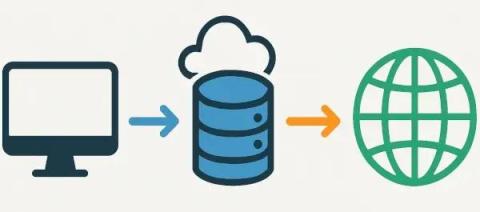
If you look at typical Application interaction with service point it tends to happen in two stages – first we connect to the Service and when we are interfacing through that established connection. In this description though one thing stays invisible – you can’t simply connect to the Service through the hostname – that host name needs to be resolved into an IP address, and if this name resolution process does not work or does not perform, the application suffers.

What Is DNS? Definition & How It Works

The Domain Name System, commonly known as DNS, is a fundamental component of the internet, yet it remains a mystery to many users. Without DNS, browsing the web would be a cumbersome process, requiring us to remember complicated numerical addresses for every website we want to visit. In this article, we will demystify DNS, explaining its importance, how it works, and its critical role in our everyday online activities.

What is a domain name? How do domain names work?

A domain name is a unique address used to access a website, like google.com or wikipedia.org. It's a string of text that maps to an IP address, which is the numerical label assigned to each device connected to the internet. Domain names are used to identify one or more IP addresses, making it easier for people to remember and access websites without memorizing complex numbers.

DNS Redirect - Redirect Domain To URL Using DNS Records

Domain redirection plays a crucial role in managing website transitions, consolidating content, and maintaining a seamless user experience. This article explores the various aspects of domain redirection, including the different types of redirects, DNS redirection, and best practices for preserving SEO value during the process.

DNS Record Types - Learn About DNS Record Types

DNS record types are essential components of the Domain Name System that provide crucial information about domains and hostnames. This article will explore the various DNS record types, including common ones like A, AAAA, CNAME, NS, MX, TXT, PTR, and SOA records, as well as less common types such as SRV, CAA, DNAME, and NAPTR records.

Forward and reverse DNS lookups: What they are, why you need them, and how to configure them

Effectively managing the dynamics of domain name lookups through the DNS is crucial for boosting the speed and security of network connections. Forward and reverse DNS lookups, the yin and yang of network connections, translate human-friendly domain names into machine-readable IP addresses and vice versa, ensuring secure connections within both public and private networks.

What is Dynamic DNS? How it works and how to set it up

In a DNS, a zone refers to a specific segment of the domain namespace, such as clouddns.manageengine.com or manageengine.com, where each segment can be a unique zone, including top-level domains, like.com. DNS servers translate domain names into IP addresses, assigning a specific IP to each zone as an authoritative response, representing network participants like services or hosts.