
Operations | Monitoring | ITSM | DevOps | Cloud

How to Migrate from BIND to AWS Route53 Safely in 3 Commands

Migrating your DNS to a cloud provider like Amazon’s Route53 service can be a daunting task. Thankfully, with dns-tools you can test your DNS records before and after the migration to ensure that everything made it across in one-piece. This is the three steps we follow when migrating to Route 53: Follow along below and in just 10 minutes you’ll know if everything will migrate smoothly for you.

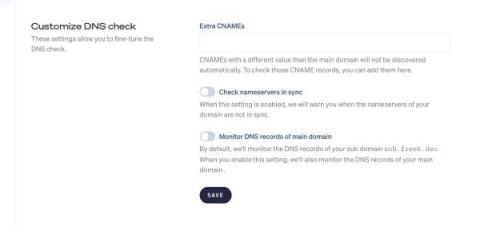
The Power of Shipa CNAMEs

As a software engineer, I admit I am not the best at networking. Can’t connect to your app for some reason, one going joke is to “always blame DNS” e.g the Domain Name System. My personal DNS experience is usually editing a few records for my personal blog and connecting a few tools and that is it. Thanks to distributed systems, had to learn all about SRV records and some more DNS concepts.

Securing DNS: interrupting attacks as early as possible

While MSPs have been making significant investments in security and offering services, it is a challenge to keep up with the frequency and evolving sophistication of today’s cybersecurity threats. Defense in Depth (DiD) is the foundation on which most MSPs have built a layered security approach for dealing with them.

Kubernetes Tips: How to find the Port of a Service with a DNS request

Last week I created a guide for our users to set up an NGINX service as an API Gateway with Qovery. The API gateway must redirect the incoming traffic to the appropriate service with the correct port. My problem is that the API Gateway does not know the ports exposed for every service. In this post, I will show you a quick tip on finding the port of a Kubernetes service with a single DNS request. Let's go!

Monitor NS1 with Datadog

NS1 is an intelligent DNS and traffic management platform that helps optimize the performance of your network infrastructure and speed application delivery to your end users. Since even a small increase in service latency can lead to churn and revenue loss, it’s critical to remove any inefficiencies embedded in basic network functions. NS1 helps ensure high performance for name resolution and routing through support for the edns0-client-subnet (ECS) DNS extension and for Filter Chain technology.

DNS filtering: What is it and why do companies use it?

The Domain Name System (DNS) makes it possible for users to access websites using domain names, like wikipedia.org, in place of nine-digit IP addresses. Due to its ubiquitous nature, DNS can be used to block access to selected websites, which is commonly known as DNS filtering. Many companies see security and productivity benefits from implementing this strategy where appropriate. Read on as we explore some of the key details around how DNS filtering works and how it can be beneficial.