Operations | Monitoring | ITSM | DevOps | Cloud

The latest News and Information on Status Pages and related technologies.

The single pane of glass approach to cloud monitoring

Dozens of SaaS services you depend on, starting from Google Workspace and Slack to Shopify, may experience downtime, partial outages, or degraded performance. And most have their own status pages, APIs, or RSS feeds. Juggling all these sources is exhausting, and many teams suffer from alert fatigue, missed early warnings, and fragmented visibility.

Status Page Subscriber Management: Notification Groups, Components, and Templates

Your status page is only useful if the right people get the right notifications at the right time. A page that blasts every incident to every subscriber will train people to ignore your emails, or worse, unsubscribe entirely. A page that notifies too slowly will leave customers finding out about your outages from Twitter before they hear from you. I'm Leo, founder of Hyperping.

How to Reduce MTTR When Third-Party Services Go Down

Your on-call phone goes off at 3:17 AM. Payments are failing. You ssh in, check your pods — all green. Database? Healthy. Load balancer? Fine. You spend 22 minutes chasing ghosts before someone checks Stripe's status page and sees the incident that started 34 minutes ago. Those 22 minutes are pure waste, and they're exactly the kind of MTTR you can reduce without touching a single line of your own code. And the fix isn't faster debugging. It's recognizing that the failure wasn't yours to debug.

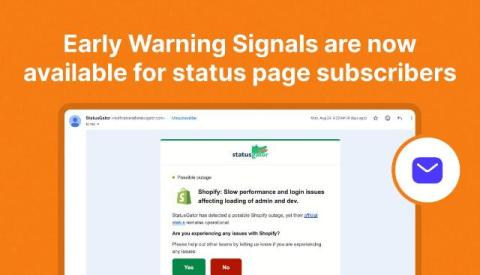
March 2026 Early Warning Signals

March 2026 saw a steady wave of service disruptions across SaaS platforms, developer tools, and infrastructure providers. What stood out wasn’t just the volume of incidents, but how early many of them surfaced. Using StatusGator’s Early Warning Signals, outages were often detected well before providers acknowledged them, sometimes by minutes, and in several cases by more than an hour.

Introducing the StatusGator MCP Server

Your AI agents can now monitor, triage, and respond to cloud outages autonomously. The way enterprises manage cloud infrastructure incidents is changing. AI agents are no longer just chatbots answering questions — they’re becoming first responders in your incident management pipeline. Today, we’re launching the StatusGator MCP Server, giving AI agents direct, structured access to the full power of StatusGator’s cloud status monitoring platform.

12 DevOps Tools You Should Be Using in 2026 (SREs Included)

When everything on the internet comes with an “AI-powered” tag attached and AI fatigue is in full gear, we come to the rescue with a list of tools and services for DevOps and SREs. No AI included. Twelve tools across infrastructure, security, observability, and incident management. Mostly open source. All of them solving specific problems without a chatbot in sight.

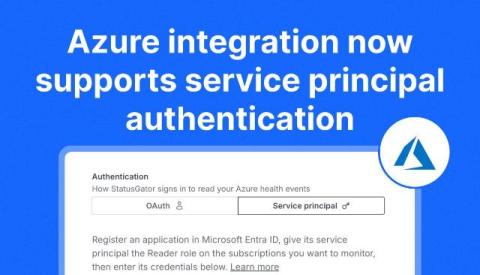
Improved Azure status integration

Monitoring Azure health across large environments should not require complicated setup. Until recently, connecting Azure to StatusGator required configuring access at the subscription level, which could become difficult for organizations managing dozens or even hundreds of subscriptions. We redesigned the Azure integration to make it simpler, more scalable, and easier to manage.