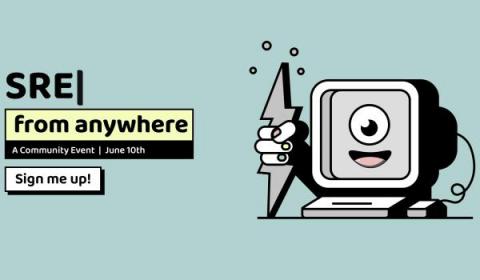
Catchpoint Announces Virtual SRE Community Event on June 10
'SRE From Anywhere' will be the largest community event for Site Reliability Engineers to learn and share best practices for delivering best digital performance.


The latest News and Information on Service Reliability Engineering and related technologies.
The Suez Canal has been big news over the last couple of weeks. We wondered how a Site Reliability Engineer (SRE) might conduct a postmortem on what happened with the Ever Given, and what that might mean if a comparable incident occurred at a modern tech company.
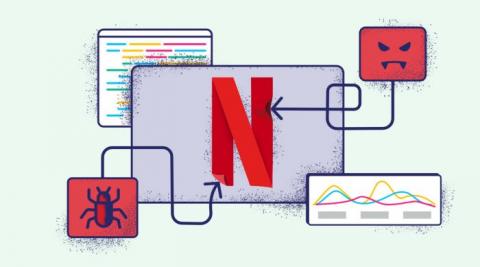
Distributed systems such as microservices have defined software engineering over the last decade. The majority of advancements have been in increasing resilience, flexibility, and rapidity of deployment at increasingly larger scales. For streaming giant Netflix, the migration to a complex cloud based microservices architecture would not have been possible without a revolutionary testing method known as fault injection. With tools like chaos monkey, Netflix employs a cutting edge testing toolkit.
By adding new complexity to reliability engineering and making physical war rooms a thing of the past, COVID-19 has imposed permanent changes on incident management. Here’s how SREs can respond.
A selection of live questions and answers from the audience of our recent webinar on how site reliability engineers can best leverage intelligent observability to monitor SLIs and SLOs, prioritize reliability over functionality, and more.
After we’d fixed Aparna’s network issue, James came to see me at my desk. Masks on, socially distanced and all that, but it was nice to have some face-to-face time. James is cool – that dry British humor and not your classic IT Ops dude. He’s been here forever and mentored me when the CIO, Charlie, hired me as the first SRE here a year or so ago. I lucked out really.
What precisely are the requirements of a DevOps practitioner, as opposed to an SRE, legacy developer, or operations manager? And do those specific requirements require a different approach to monitoring?
What a difference a year makes. In a matter of 365 days, the entire planet stared down at uncertainty, and while most of the world is far from recovered, we are starting to see a time where some level of normalcy will return. But what will this look like? How will the past year transform our social interactions, our time out of the house, and how we conduct business?
People sometimes think that implementing Site Reliability Engineering (or DevOps for that matter) will magically make everything better. Just sprinkle a little bit of SRE fairy dust on your organization and your services will be more reliable, more profitable, and your IT, product and engineering teams will be happy. It’s easy to see why people think this way. Some of the world’s most reliable and scalable services run with the help of an SRE team, Google being the prime example.
This is my first week here as the first dedicated SRE for Honeycomb, and in a welcoming gesture, I was asked if I wanted to write a blog post about my first impressions and what made me decide to join the team. I’ve got a ton of personal reasons for joining Honeycomb that may not be worth being all public about, but after thinking for a while, I realized that many of the things I personally found interesting could point towards attitudes that result in better software elsewhere.