Operations | Monitoring | ITSM | DevOps | Cloud

The latest News and Information on Observabilty for complex systems and related technologies.

WEBINAR: Advanced Serverless Debugging through Observability

In this webinar we will be covering the advanced techniques of observability, debugging and operations with large-scale serverless environments. We'll be looking at the best practices for ingesting and navigating logs, metrics and traces to easily understand the state of your application and develop confidence in your operational practices.

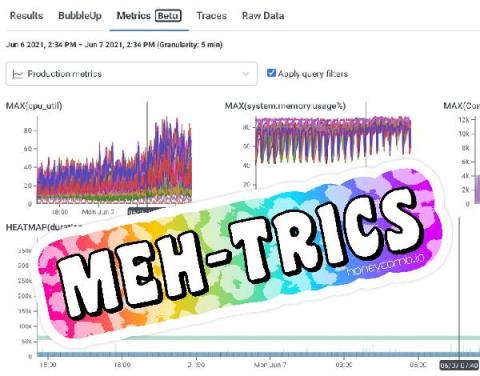
Getting Metrics Into Honeycomb

Honeycomb is an event-based observability tool. Rather than relying on the rigid pre-aggregated measures provided by metrics, Honeycomb instead favors using events because they provide a much greater degree of flexibility. But that doesn’t mean metrics don’t belong in Honeycomb. Our new whitepaper, Getting Started With Honeycomb Metrics, breaks down exactly how to do that.

Event in Review: Splunk's DevOps & Observability Best Practices Event

Last week, Catchpoint was one of the sponsors of Splunk’s half-day DevOps & Observability Best Practices event. It was a jampacked conference that examined what observability is, its key drivers, and how observability and monitoring exist “like two peas in a pod”, perfect compliments to one another in enabling enterprise to better understand overall systems behavior and health.

Galileo and Splunk: Ensuring Patient Trust with Serverless Observability

When it comes to patient care, convenience and trust are critical to success. Healthcare startup Galileo prioritizes just that through technology that gives people 24/7 access to medical care and improves the dialogue between patients and their doctors. Galileo ensures uptime, minimizes latency, and reduces errors so patients get the help they need when they need it and can ultimately live better, healthier lives.

Progressive Delivery- Using feature flags & observability to ship confidently

Level up your deployments for better resiliency and reliability. After 15 years, the basic revelations of the CI/CD revolution are no longer news—small-batch changes with more frequent releases tend to be more stable and recover faster than lengthy big-bang release cycles. Automated is better than manual, instrumentation is key, and speed is critical. But the promise doesn't stop there.

Monitoring vs Observability: What's the Difference?

Monitoring has never been simple, but there was a time when it was simpler. You had a device you could collect data from; you knew the metrics you needed to monitor, and if something went wrong, you could find the root cause. But as IT becomes increasingly and exponentially more complex, more devices, more environments, more things to monitor, more updates, more data, more everything; monitoring in general needs to grow with it.

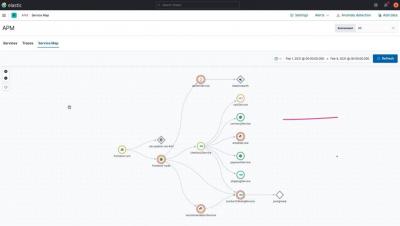
Monitoring infrastructure and microservices with Elastic Observability

Trends in the infrastructure and software space have changed the way we build and run software. As a result, we have started treating our infrastructure as code, which has helped us lower costs and get our products to market more quickly. These new architectures also give us the ability to test our software faster in production-like deployments, and generally deliver more stable and reproducible deployments.