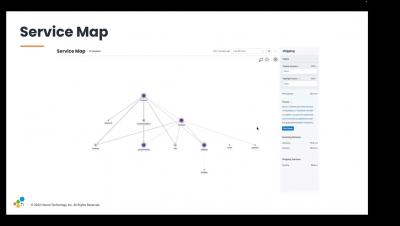
Learn to Leverage Service Maps with Honeycomb
Let Honeycomb map out your distributed services


The latest News and Information on Observabilty for complex systems and related technologies.
Observability is critical to any software development. It is a term that describes the ability to monitor the performance and health of applications, services, and infrastructure. Observability aims to quickly identify and troubleshoot problems before they become full-blown incidents that can lead to costly downtime. But how much should you invest in an observability stack? Regarding the cost of your observability stack, there is no one-size-fits-all answer.
If the past year has taught us anything, it’s that the more things change, the more things stay the same. The whiplash and pivot from the go-go economy post-pandemic to a belt-tightening macroeconomic environment induced by higher inflation and interest rates has been seen before, but rarely this quickly. Technology leaders have always had to do more with less, but this slowdown may be unpredictable, longer, and more pronounced than expected.
The digital workplace has evolved dramatically over the past decade, both in terms of the increased reliance on technology for daily operations and the complexity of that technology. In order to manage an improve the digital workplace, service desk teams need more than just a comprehensive view of their IT environments — they need to be able to analyze that data in real-time to make faster, more continuously effective decisions. Enter: digital workplace observability.
Maintaining trust in the business services your customers rely on is everything. With ever-increasing customer expectations and the promise of ‘always-on’ services, poor digital experiences and outages can cause significant harm to your business. The Interlink Software AIOps and Observability platform strengthens IT teams’ capability to deliver more reliable, available digital services and reduce the risk of customer impacting disruption.
I want to make my microservices more observable. Currently, I only have logs. I’ll add metrics soon, but I’m not really sure if there is a set path you follow. Is there a beginner's guide to observability of some sort, or best practice, like you have to have x kinds of metrics? I just want to know what all possibilities are out there. I am very new to this space.