Operations | Monitoring | ITSM | DevOps | Cloud

The latest News and Information on Observabilty for complex systems and related technologies.

Coroot: The Ultimate eBPF Observability Platform. #observability #devopstools #monitoringtool

Explore the benefits of using Coroot for system monitoring, alerting, and inspection. Watch the full "Zero-Instrumentation Observability with eBPF" webinar, and learn from Peter Zaitsev. Coroot is an open source observability platform that helps engineers fix service outages and even prevent them. It continuously audits telemetry data to highlight issues and weak spots in your services. Quick setup, no code required.

Coroot's Approach to eBPF and OpenTelemetry. #observability #monitoringtool #shorts #devopstools

Discover how Coroot's passive approach to eBPF can provide valuable insights without impacting your system. Coroot is an open source observability platform that helps engineers fix service outages and even prevent them. It continuously audits telemetry data to highlight issues and weak spots in your services. Quick setup, no code required.

Grafana vs Splunk - Features, Pricing, and Performance Compared [2024]

Monitoring and observability tools are critical for organizations to keep their systems running efficiently. Grafana and Splunk are two leading platforms that cater to various observability needs, but they differ significantly in functionality, user base, and cost. This article will explore their features, strengths, and limitations to help you choose the right tool for your use case.

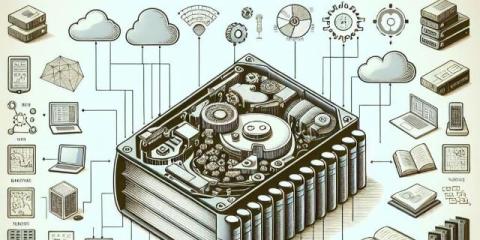
An Engineer's Checklist of Logging Best Practices

The best DevOps and SRE teams have shifted their approach to monitoring and logging their systems. These teams debug problems cohesively and rationally, regardless of the system’s complexity. Gone are the days of having a slew of logs that fail to explain the cause of alerts, system failures, and other unknowns.

Using observability to ship faster with confidence ft. Christine Yen, CEO of Honeycomb

In this episode of The Confident Commit, Rob sits down with Christine Yen, CEO of Honeycomb, to delve into the evolving role of observability in modern software development. They discuss how observability goes beyond traditional metrics and monitoring, and allows developers to be better prepared for the unknown and embrace the complexities of distributed systems. Christine shares insights on how observability not only boosts developer confidence but also enhances productivity by reducing toil and enabling teams to focus on delivering value for customers.

How OpenTelemetry is Transforming Observability

The OpenTelemetry project is changing how organizations approach observability. It aims to standardize monitoring across different systems. OpenTelemetry—commonly referred to as OTel—provides APIs, SDKs, exporters, and collectors. It is making data collection, analysis, and utilization more efficient, leading to better decision-making and technology adoption.

A CoPE's Duty: Indexing on Prod

Odds are that a software engineer today is really focused on one place: pre-prod. Short for “pre-production,” this is slang for an environment where software code operates in a prototype phase of its development lifecycle. Common sense would have one believe that this is a safe space, a workbench of sorts, where problems can be found and remediated.

Splunk vs Dynatrace - Detailed Comparison [2024]

Splunk and Dynatrace are two powerful platforms in the realm of observability and performance monitoring. Each offers unique strengths that cater to different monitoring needs. In this article, we'll explore the features, pros, and cons of both tools, and introduce an exciting alternative that combines the best of both worlds.

The Layers, Not Pillars, of Observability

Remember the Tabs vs. Spaces arguments? It seems that observability has grown up enough that we are arguing over which signals are the “best” signals for observability. Often referred to as the Pillars of Observability, Metrics, Logs, and Traces (sometimes adding Events for MELT) each provide a unique perspective on a system. What happens when we change our perspective from finding the “best” telemetry format to finding the telemetry that aligns with the problems we need to solve?