Operations | Monitoring | ITSM | DevOps | Cloud

The latest News and Information on Log Management, Log Analytics and related technologies.

Source-Side Queueing: You Down With UDP?

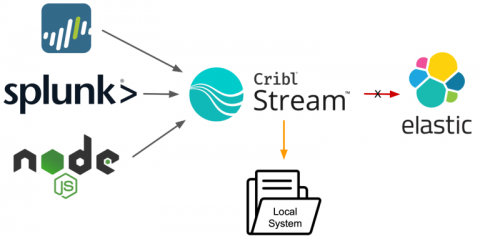
Source-side queueing is a fancy way of saying: You can configure Cribl products to make sure data isn’t lost in the event of downstream backpressure, again. Those familiar with Cribl Stream might be aware of destination queuing or persistent queuing, wherein Stream can write data to the local disk in the event of an issue reaching the destination. Maybe your SIEM is suffering from disk I/O latency. Maybe there is a DNS problem with your load balancer (Hint: It’s always DNS).

Splunk Embarks on AWS Graviton Journey with Amazon EC2 Im4gn and Is4gen Instances

We are excited to announce that Splunk Cloud Platform is moving to next generation AWS Graviton2 processor hardware to help enable enhanced performance for customers who choose AWS as a provider. This begins a phased transition of our Splunk Cloud Platform indexer tier in a move that will help Splunk operate more efficiently and provide customers with the cutting edge in processing technology.

Building Your Security Analytics Use Cases

It’s time again for another meeting with senior leadership. You know that they will ask you the hard questions, like “how do you know that your detection and response times are ‘good enough’?” You think you’re doing a good job securing the organization. You haven’t had a security incident yet. At the same time, you also know that you have no way to prove your approach to security is working. You’re reading your threat intelligence feeds.

Taming the Complexity of Windows Event Collection with Cribl Stream 3.4

OK, first things first. I have to admit that I am, first and foremost, an old-school UNIX systems administrator. I’m that grizzled sysadmin in your shop who soliloquizes wistfully about managing UUCP for email “back in the day.” Centralizing Logs? Yeah, we had syslog, and saved it all off to compressed files.

Reporting Up: Recommendations for Log Analysis

What kind of log information should be reported up the chain? At a certain point during log examination analysts start to ask, “What information is important enough to share with my supervisor?” This post covers useful categories of information to monitor and report that indicate potential security issues. And remember: reporting up doesn’t mean going directly to senior management. Most issues can be reported directly to an immediate supervisor.

What is SecOps?

SecOps is a short form for Security Operations, a methodology that aims to automate crucial security tasks, with the goal of developing more secure applications. The purpose of SecOps is to minimize security risks during the development process and daily activities. Under a joint SecOps strategy, the security and operations teams work together to maintain a safe environment by identifying and resolving vulnerabilities and resolving any security issues.