Operations | Monitoring | ITSM | DevOps | Cloud

Anatomy of the AI Software Factory: The Context Layer

This is Part 2 of the AI Software Factory series. In Part 1, we established that the Agile methodology is buckling under the weight of “elastic code.” When AI agents can generate functionality in seconds, two-week sprints and manual task management become organizational bottlenecks. We introduced the concept of the AI Software Factory: a shift from managing human tasks to managing business intent through a “Funnel of Increasing Trust.” But a factory requires infrastructure.

From Traffic Context to Confirmed Fix in 3 Minutes

We’ve been building an AI agent that can take a production bug, find the root cause in captured traffic, write a fix, and validate it before a human reviews it. We call it Agent Factory. Last week we ran it on ourselves, against a real bug in our own production service. The first thing we did was get the workflow wrong.

Server Monitoring: The Complete Guide to Metrics, Tools, and Best Practices

If you run IT operations, you already know servers carry most of what your business depends on: When a server slows down or goes offline, the impact spreads fast, and the team feels it before the dashboard does. That's the core problem server monitoring is built to solve. It watches the health and performance of your servers continuously, so issues get caught early instead of becoming outages. The cost of getting these wrong keeps climbing.

Replace Verizon Email-to-Text with OnPage's Paging / Critical Alerting Capabilities

It’s 2:00 AM on a Saturday. An energy company’s thermal storage system temperature violently spikes past safe operating thresholds. The monitoring system instantly fires off an emergency alert via a standard Verizon email-to-text gateway. But instead of waking the engineer, the message is delayed by the carrier network. By the time the on-call responder sees the text hours later, the equipment has failed, resulting in catastrophic downtime.

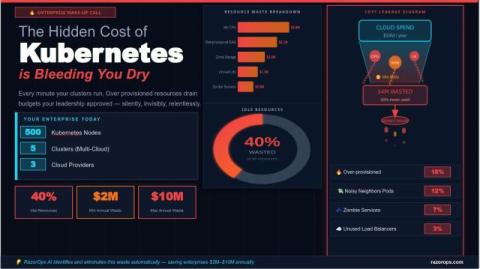
The Hidden Cost of Kubernetes: Why Your Cloud Bill Is 40% Higher Than It Should Be

The average enterprise running Kubernetes wastes between $2 million and $10 million annually — not from overspending, but from under-optimizing. This is the story of costs you can't see on your dashboard but that your CFO feels every quarter.

The sovereignty without toil guide: why compliance shouldn't require a Kubernetes tax

True data sovereignty isn't about managing your own cloud accounts; it’s about where your data resides and how it is governed. By utilizing a unified configuration file to deploy on sovereign infrastructure like OVHcloud, Upsun provides standardized sovereignty without the complexity of “Bring Your Own Cloud”.

Core Java vs Enterprise Java: Jakarta EE, Spring Boot & Modern Trade-offs [2026 Guide] | Harness Blog

‍ When you're architecting an enterprise Java application, one decision quietly shapes everything downstream: runtime footprint, deployment pipelines, and how your platform team handles incidents at 3 a.m. For two decades, that decision was framed as Java SE vs Java EE. In 2026, that framing has quietly inverted.

What a Context Graph Actually Is, and How to Build One | Harness Blog

Engineers have been shipping pieces of "the graph" for years. Service maps. Dependency graphs. Knowledge graphs. RDF triples. The newest entrant is the context graph, and the reason it shows up now is specific: software is increasingly executed by agents, and agents need a model of how work actually happens, not just an index of what exists.