Operations | Monitoring | ITSM | DevOps | Cloud

Beyond monitoring: The power of observability

The demand for seamless user experiences and robust system reliability is at an all-time high, and businesses are racing to meet these expectations. But as system complexity increases, traditional monitoring tools are falling short. Observability offers a paradigm shift. It goes beyond tracking metrics and provides deep insights to understand the “why” behind system behavior by parsing and contextualizing unstructured data.
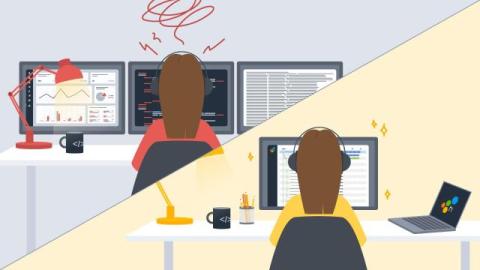
How to Optimize Costs and Strengthen IT with Teneo's Deep Observability

Teneo understands that it can be hard to balance cost and depth of observability in todays fast-paced digital landscape, where organizations face the challenge of managing increasingly complex IT infrastructures while keeping costs under control. Achieving this balance requires a new approach, this is why we have developed our Open Observability platform, a critical component of Teneo’s StreamlineX framework.

Why Observability 2.0 Is Such a Gamechanger

One of the hardest parts of my job is to get people to appreciate just how much of a difference Honeycomb/observability 2.0 is compared to their current way of working. It’s not just a small step up or a linear improvement. Rather, it’s an entire step change in the way that you write, deploy, and operate software for your customers.

Keeping Spending in Check: Observability's Positive Impact on Cost Management

Tool sprawl within organizations doesn’t just create a fragmented user experience; it poses a real threat to enterprises’ bottom lines. Consider these statistics: This fragmentation significantly limits worker productivity. IT leaders spend hundreds of hours trying to manage multiple tools, map their environments, and upkeep aging systems that are either outdated or simply no longer necessary.

Streamlining Telemetry with Apica's Fleet Management Solution: A Deep Dive

In the rapidly evolving IT environment, observability at scale has become a critical challenge for organizations aiming to maintain operational excellence. The proliferation of telemetry collection agents across diverse infrastructures often increases complexity, resource strain, and configuration inconsistencies.

Booking.com's Journey to Enhanced Observability

Since its early startup beginnings in Amsterdam, Booking.com has redefined the travel industry, establishing itself as a premier platform for millions of travelers worldwide. With over 28 million accommodation listings and a staggering 1.5 million room nights booked every day, Booking.com operates on a scale that demands a robust and constantly monitored infrastructure.

Monitoring database exposure on Kubernetes and VMs

This week, security researchers at Wiz published a report about an internal database at DeepSeek being exposed to the internet. This kind of security risk is surprisingly common and can affect any company. The only way to prevent it is through continuous monitoring. But in modern infrastructures, services can be exposed in many different ways, making detection tricky. At Coroot, we realized that the telemetry data we already collect can help identify these risks — without requiring any extra setup.

Realizing the business value of OpenTelemetry-native observability

Transform your organization's observability strategy with open standards and simplified data collection Modern organizations face an unprecedented observability challenge. As systems grow more complex and distributed, traditional monitoring approaches are struggling to keep pace. With data volumes doubling every two years and systems spanning multiple clouds and technologies, organizations need a new approach to maintain visibility into their operations.

Catching Up With Fender: How Frontend Observability Powers Better User Experiences

For years, Fender Musical Instruments has been synonymous with iconic guitars and amplifiers. But in recent years, the company has expanded its legacy into the digital realm, offering tools like Fender Play, an innovative learning platform for aspiring musicians. Behind this digital evolution lies a focus on delivering exceptional user experiences for its consumer-facing applications—a mission supported by Honeycomb for Frontend Observability.

Using AI for Troubleshooting: OpenAI vs DeepSeek

AI is now a go-to tool for everything from writing to coding. Modern LLMs are so powerful that, with the right prompt and a few adjustments, they can handle tasks almost effortlessly. At Coroot, we’ve been experimenting with AI for observability. Our goal is to make it useful in the final stage of troubleshooting—when we’ve already identified which service is causing issues, like Postgres, but finding the exact root cause is still tricky due to the many possible scenarios.