Operations | Monitoring | ITSM | DevOps | Cloud

Achieving the Observability Imperative Requires AI

The shift to Observability Over the last six months, unified monitoring, log management, and event management vendors have reoriented their technology portfolios (often without any change to the underlying functionality) towards Observability. In so doing, a fair amount of confusion has been generated in the market.
Take the first step toward SRE with Cloud Operations Sandbox

At Google Cloud, we strive to bring Site Reliability Engineering (SRE) culture to our customers not only through training on organizational best practices, but also with the tools you need to run successful cloud services. Part and parcel of that is comprehensive observability tooling—logging, monitoring, tracing, profiling and debugging—which can help you troubleshoot production issues faster, increase release velocity and improve service reliability.

How Prometheus monitoring mixins can make effective observability strategies accessible to all

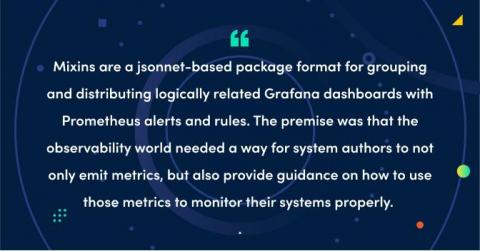
Three years ago, Tom Wilkie and Frederic Branczyk sketched out the idea for Prometheus monitoring mixins. This is a jsonnet-based package format for grouping and distributing logically related Grafana dashboards with Prometheus alerts and rules. The premise was that the observability world needed a way for system authors to not only emit metrics, but also provide guidance on how to use those metrics to monitor their systems properly.

5 Tips for Observability Success

In 2020, the concept of observability in IT operations gained mindshare as IT leaders looked for new ways to rein in the complexity that’s grown organically with cloud computing and rapid digitization. Observability differs from IT monitoring in that it focuses on the development of the application and rich instrumentation so that operators can ask meaningful questions about how the software works or is working in production.

Force Multiply Your Observability Stack with a Platform Thinking Strategy

Platform thinking is a term that has spread throughout the business and technology ecosystem. But what is platform thinking, and how can a platform strategy force multiply the observability capabilities of your team? Platform thinking is an evolution from the traditional pipeline model. In this model, we have the provider/producer at one end and the consumer at the other, with value traveling in one direction.

Innovation Insight for Observability by Gartner

In its latest report, research firm Gartner tackles the trending subject of Observability. According to Gartner, "Observability is the evolution of monitoring into a process that offers insight into digital business applications, speeds innovation and enhances customer experience. I&O leaders should use observability to extend current monitoring capabilities, processes, and culture to deliver these benefits." This blog post gives you a sneak-peek of this new analyst report about observability.

2020: The Year Bee-hind Us

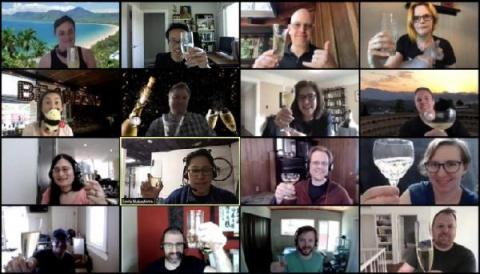
Hey, observability friends. I’m Shelby. I joined Honeycomb back in March. This year I’m carrying the torch of our annual tradition, looking back at the Year Bee-hind Us. Cue up the Auld Lang Syne. This wasn’t easy to write. Everyone at Honeycomb has been affected by the events of this year: the pandemic plus lockdown, school closures, complete life upheaval. We’ve witnessed or directly experienced racist injustice, social unrest, and state violence.

A Recap of the KubeCon + CloudNativeCon Observability Track

OpenTelemetry has evolved so much since the 2019 KubeCon North America in San Diego, where I live-demoed OpenTelemetry on the keynote stage and highlighted our alpha to the world. We’re excited to be entering general availability of our Collector and Tracing SDKs soon. While I missed the energy from the packed crowd of over 10,000 technologists cheering me on, it was wonderful that this year’s event was more accessible than ever to a worldwide audience.