Operations | Monitoring | ITSM | DevOps | Cloud

Why Observability Is Essential for Platform Engineers?

Observability is how platform teams stop being the answer to every question and start building platforms that answer those questions themselves. This article explains specifically how observability enables platform engineers to support development teams better which reducing ticket volume, cutting MTTR, enabling SLO ownership, and making microservice debugging something devs can do without escalating to you.
How Support Uses Honeycomb to Debug Honeycomb

You'd think that working at an observability company means everyone knows exactly where to find everything in the data. It doesn't. Especially not on the support team. We're the ones who get the tickets. We're in the telemetry every day trying to figure out what went wrong for a customer, and we do that by pointing Honeycomb at itself. Here's how that actually works, and how it's changed.

Splunk Observability at Cisco Live: Agentic Observability for the AI Era

Observability has always been about seeing clearly under pressure. But the pressure has changed. Applications are more distributed. Kubernetes environments keep expanding. Digital experiences depend on services, APIs, networks, third-party providers, and now AI models and agents that can make decisions faster than a human team can review every signal.

How to Build Real-Time Supply Chain Observability

"One missing pallet." That's how a warehouse supervisor in New Jersey described the start of a week-long supply chain mess back in 2024. One pallet. Then came delayed trucks, angry retailers, overtime pay, and a customer threatening to walk. In logistics, small gaps don't stay small for long. And the uncomfortable part is that most teams are already working hard. The issue isn't effort. It's alignment. The data exists in most organizations-it just doesn't show the same reality at the same time. Which leaves a basic question surprisingly hard to answer: what's actually happening right now?

Unified observability for Alibaba Cloud with Datadog

Alibaba Cloud is a major cloud provider in APAC, offering industry-leading foundational AI models in addition to compute, managed databases, object storage, and Kubernetes through its Container Service for Kubernetes (ACK). Teams choose Alibaba Cloud for its infrastructure availability across Asia Pacific and its managed services. For SREs and platform engineers, that often means running Alibaba Cloud alongside AWS, Google Cloud, or Microsoft Azure.

The Kubeshark Workflow That Doesn't Stop at the Dashboard

The Observability Gap shows up the moment you try to reproduce a production bug locally. Your traces tell you a request was slow. Your logs tell you which line printed. Neither tells you what was actually on the wire: the headers, the JSON body, the surprise field your client started sending last Tuesday. Until now, closing that gap meant SSHing to a node, attaching a debugger, or shipping a sidecar through change review.

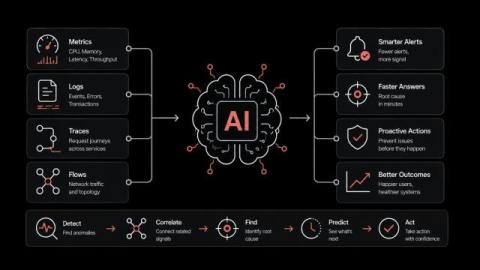
What is AI-Powered Observability? A Complete Guide for IT Teams in 2026

Is your monitoring stack really giving you clarity, or just more alerts? Your monitoring stack is probably working exactly as designed. That is the problem. As systems grow, most IT and platform teams start to see the same patterns: At this point, traditional monitoring starts to feel limited. This is where teams begin exploring AI in observability. In this guide, we will explain what AI-powered observability actually means, how it works, and when it is useful.

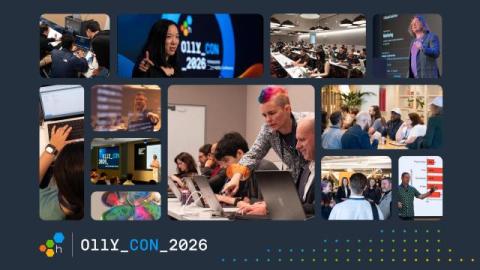
Everything We Talked About at O11yCon 2026

We just wrapped O11yCon 2026, and this year's conversations hit differently. Agent-based software development is here, now. It's no longer an optional choice, and everybody is struggling to understand what their agents are doing and how to make them cost less and perform better. Over the course of fifteen talks, we saw clearly that the old assumptions on how and who (or what) writes our software has been upended. Here are some highlights. We'll have videos available in the near future.

Observability Expanding Beyond Infrastructure and Into AI Systems

Observability revolves essentially around understanding infrastructure health. This means that operations teams monitor applications, netwo0rks, database and cloud environments using familiar signals. They use logs, metrics, latency, uptime measurements, and traces. If systems remain available and the performance stays within expected thresholds, the teams have enough visibility to understand whether applications are functioning properly.

Why Traditional Observability Breaks Down in Hybrid Cloud Environments

Hybrid cloud has reshaped the way enterprises build, run, and troubleshoot digital services. Applications now stretch across on-premises infrastructure, cloud platforms, regional services, interconnects, and distributed dependencies that change constantly. Operational complexity has expanded with that footprint, yet many observability practices still reflect assumptions from an earlier era of simpler architectures and clearer boundaries. That gap shows up fast during an incident.