Operations | Monitoring | ITSM | DevOps | Cloud

How to Monitor Snowflake with OpenTelemetry

Snowflake is a powerful, cloud-based data platform designed for high-performance analytics. Whether you're running massive analytical queries, managing structured and semi-structured data, or optimizing data pipelines, visibility into your Snowflake instance is essential. Performance bottlenecks, query execution delays, and unexpected cost spikes can quickly become issues without proper monitoring.


OpenTelemetry Visualization Setup: A Developer's Guide

If you've ever tried to set up OpenTelemetry visualization, you know it can be a bit overwhelming. But don't worry—in this guide, we'll break it all down step by step. Whether you're just getting started or looking to fine-tune your existing setup, this walkthrough will help you get the most out of your telemetry data.

OpenTelemetry UI: The Ultimate Guide for Developers

If you’ve ever struggled with understanding distributed traces, managing metrics, or debugging complex applications, OpenTelemetry is your best friend. But what about the OpenTelemetry UI? How do you visualize and interact with all that telemetry data? In this guide, we’ll explore the best ways to use OpenTelemetry’s UI options, from setting up a proper observability stack to choosing the right front-end visualization tools.

Integrating OpenTelemetry with Grafana for Better Observability

Modern application observability is essential for ensuring system performance, diagnosing issues, and optimizing user experiences. OpenTelemetry (Otel) and Grafana serve as two key components in achieving end-to-end visibility. While OpenTelemetry focuses on instrumenting applications to collect telemetry data, Grafana specializes in visualizing this data, making it actionable and insightful.

OpenTelemetry: The Future of Observability with Advanced Tracing and Metrics

Hey there! Oscar here. After spending countless hours wrestling with various monitoring tools and proprietary solutions, I wanted to share my thoughts on what I believe is revolutionizing the observability landscape: OpenTelemetry (OTel). OpenTelemetry revolutionizes observability in distributed systems.

A Quick Guide for OpenTelemetry Python Instrumentation

OpenTelemetry is an open-source tool that helps you keep an eye on your application’s performance. Whether you’re building microservices, using serverless setups, or working with a traditional monolithic app, it’s crucial to monitor and trace your app’s behavior for debugging and optimization. OpenTelemetry's Python instrumentation is an excellent way to track traces, metrics, and logs across your entire app.

Easiest Way to Monitor NGINX Performance with OpenTelemetry

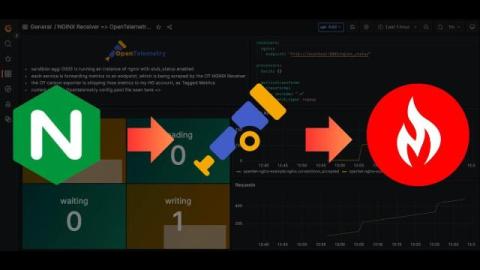
If you're looking for a straightforward way to collect NGINX metrics via OpenTelemetry and send them to your Graphite-based monitoring setup, this article is for you! With minimal configuration you’ll be collecting key metrics from your NGINX connections within minutes. In this article, we'll explain how to install the OpenTelemetry Collector, and easily configure it to receive and export NGINX metrics to a Hosted Carbon endpoint.

How to observe AWS Lambda functions using the OpenTelemetry Collector and Grafana Cloud

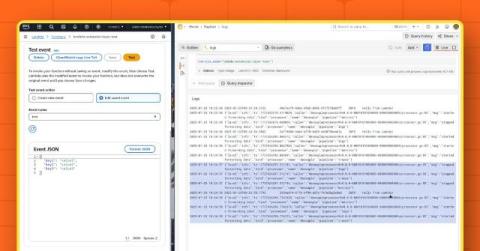
Getting telemetry data out of modern applications is very straightforward—or at least it should be. You set up a collector that either receives data from your application or asks it to provide an up-to-date state of various counters. This happens every minute or so, and if it’s a second late or early, no one really bats an eye. But what if the application isn’t around for long? What if every second waiting for the data to be collected is billed?

Scraping NGINX Metrics with OpenTelemetry & Exporting to Carbon

Looking for a straightforward way to collect NGINX metrics with OpenTelemetry and send them to your Graphite-based monitoring setup? Unlike Prometheus, which requires configuring scrape jobs and query language nuances, Carbon/Graphite offers a simpler setup with minimal overhead—just send metrics as plain text and query them easily with familiar tools like Grafana. Whether you're setting up dashboards, alerts, or just keeping an eye on traffic, this guide will get you actionable insights in no time!

Traces Without Limits - Load a Million Spans with SigNoz

Observability at scale is challenging—especially when dealing with high-volume distributed traces. Traditional tracing tools struggle with large traces containing thousands of spans, often leading to sluggish UIs and an unmanageable debugging experience. Most tracing tools we checked have a limit on the maximum spans they can load for a single trace. But with SigNoz, we’ve redefined what’s possible.