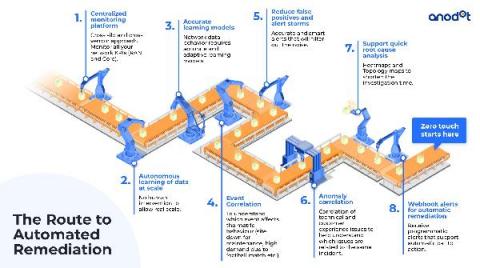
The ability to detect and alert performance issues quickly is key to reducing the Mean Time to Resolve (MTTR). Proactive monitoring will catch incidents early on but triggering the right alerts and notifying the relevant incident management team is just as critical. Enterprises rely on multiple disparate tools to monitor different systems so there is a lot of data and noise generated which can render incident management inefficient.
When getting started using Icinga 2, it is often enough to use a single master instance. But if your monitoring is business critical, you don’t want to rely on a single master being online. This post will guide you through setting up Icinga 2 with two masters in HA mode.
We are super excited to share that we are currently testing and in the process of rolling out a new desktop global navigation to all of our users. Things that are clear in retrospect often emerge from ambiguous and humble beginnings. Initially built as a simple on-call management tool for IT responders, PagerDuty has evolved into an end-to-end, enterprise-grade digital operations platform.
Centreon is a solution for monitoring applications, systems and networks, based on Nagios source code. On 1st August, 2005 the company Merethis (now Centreon) was founded and began working on “their” Nagios version, calling it Oreon. In July 2007, the Oreon software changed its name to Centreon due to a name conflict with Orion (a component of the SolarWinds monitoring suite).
Machine learning pipelines have evolved tremendously in the past several years. With a wide variety of tools and frameworks out there to simplify building, training, and deployment, the turnaround time on machine learning model development has improved drastically. However, even with all these simplifications, there is still a steep learning curve associated with a lot of these tools. But not with Elastic.
AWS DynamoDB changed the database game in Serverless and continues to do so, as its design repeatedly proves its huge value. This guide takes you through everything there is to know about DynamoDB so you can rest assured you’re using the service in its best way and reaping all of the benefits.
Google Cloud has been gaining some noticeable traction in recent months: 43% growth in Q2 is nothing to sniff about, especially during a global recession. Masaf Dawood is director of Google Cloud services with SpringML, a premier Google Cloud partner with specialties in application development, data analytics, machine learning and marketing analytics. SpringML works exclusively with Google Cloud and has worked on 200 engagements with Google since the consultancy was founded in 2015.
If you’ve deployed an application or service to the Amazon Web Service (AWS) cloud, you’ve probably made use of an EC2 instance. One of the decisions that you had to make before you could start a new instance, was which instance type to use. Choosing an EC2 instance type can be a complicated process. AWS organizes their instance types into instance families, and within an instance family, there are varying sizes from micro to 32xlarge.
The ability to automate your incident response process means you can start responding to incidents faster. So it’s easy to see why FireHydrant Runbooks is so popular within the platform. When you let automation take over, you can spend more focus fixing problems and keeping your customers happy. Now with the addition of conditions, you can create even more powerful automation.