Operations | Monitoring | ITSM | DevOps | Cloud

Effective DataOps Tools for Improving Performance

Some of the best-selling books of all time are self-help books. Reading about the potential for change always intrigues people enough to buy the book. To succeed in enacting positive change, you must do just that—change. People’s habits are familiar and safe, and change requires effort down an unknown path. People aren’t sure of the outcome, and as a result, usually stick with the proven method—even if it’s what they’re trying to change.

How to Make SQL Server Faster on Azure VMs

Many organizations have migrated their environments from on-premises to the cloud, and one of the clouds of choice is Microsoft Azure. For SQL Server workloads, organizations can use platform as a service solutions with features like Azure SQL Database and Managed Instance or infrastructure as a service solutions with Azure SQL virtual machines. Azure SQL virtual machines are an easy target for organizations migrating to Azure due to the simplicity of the migration.

SolarWinds Gives Data Pros the Tools for DataOps Success With Database Mapper and Task Factory

Company enables data pros to accelerate data delivery and cloud migrations more efficiently; showcases database management solutions and educates on database strategies at upcoming industry events.

Web Performance of the World's Top 50 Blogs

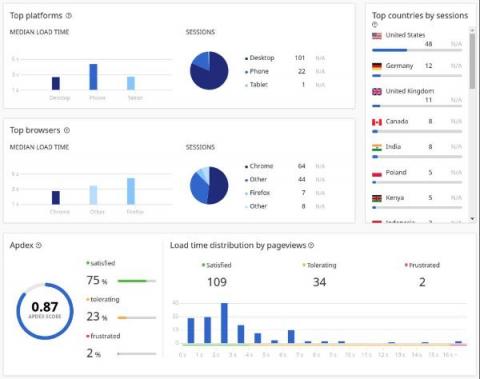
Am I the only one who thinks blogs were in their prime in the mid-2010s, before the internet began consuming content at wicked fast rates (thanks, Instagram and TikTok)? When someone says the word blog, I think of the chokehold 2015 southern American female fashion bloggers had on the internet. Pure pumpkin spice latte fashion. And though those blogs have, probably for the best, slipped away from the limelight, blogs are still alive and well.

Master Data Management and Data Governance-How to Build an Effective Strategy

As organizations marshal their data to drive business value throughout the enterprise, it’s becoming more important than ever to ensure the quality of this data. Building data quality, data validation testing, and aligning the data with your organization’s master data (such as products, customers, assets, and locations) is critically important to ensure your reporting is consistent and accurate.

What Is MongoDB's _id Field and How to Use It

The MongoDB _id field is fundamental to every collection in MongoDB, and, by default, it has some useful properties users can take advantage of when familiar with how _id is generated. Understanding the field's default behavior and the advantages and pitfalls associated with it can be useful for managing your collections as well as understanding when to override it.

What Is CI/CD and How to Build ETL Processes

In today’s world of heterogeneous data ecosystems, managing and consuming data can be cumbersome. Organizations often have multiple systems of truth in corresponding to the applications managing the data. While data engineers dream of software that would make it easy to consume and digest different data streams from disparate systems, that scenario rarely comes to fruition.

WordPress Error Logs and Activity Logs

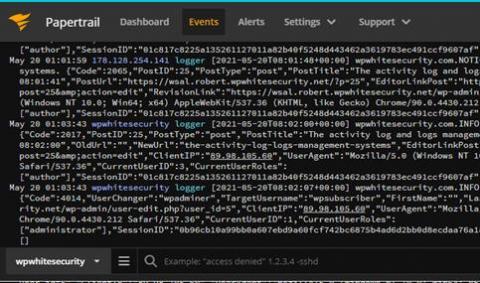
Logging is a fundamental part of software development. While an app is being developed, we rely on logging to confirm our inputs and outputs match our expectations. In production, logging can be an invaluable resource for tracking down bugs or measuring how users interact with the app. We can also consider logs as a sort of time-series value, where a timestamp is associated with a user’s specific action. These logs can be structured, gathered, and analyzed to provide teams with more information.

How to Prepare for a SQL Server DBA Interview and Questions

So, you have an interview lined up for a sweet new gig as a SQL Server database administrator (DBA). What interview questions will you be asked? How can you make sure you ace the interview? What will make you stand out from the other candidates? There are no concrete answers, because… “it depends.” However, you can count on at least two major components of your interview – a technical component and a non-technical component, often focusing on soft skills.