Operations | Monitoring | ITSM | DevOps | Cloud

Playwright End-to-End Testing with Recorded API Mocks

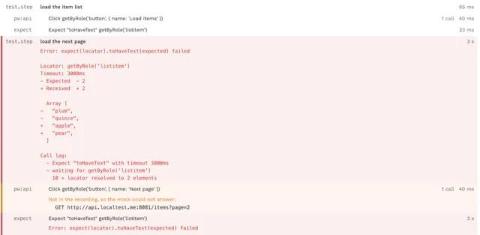
Your Playwright test clicks Next page, waits for the item list, and times out. Now you’re digging through a trace to find out whether the page broke or an API call failed. Traditional browser-testing workflows focus on clicks, page state and UI assertions. Those checks tell you whether a user journey works, but investigating a failure also means understanding the APIs behind the page.

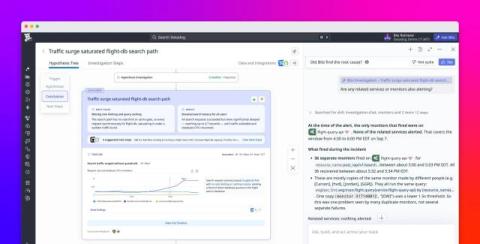
Bits investigations are faster, more accurate, and cost less

When we launched Bits Investigation in December 2025, our goal was to give teams an always-on agent that could investigate every alert and reduce mean time to resolve (MTTR). Since then, we’ve focused on making Bits faster, more cost effective, and even more accurate. At launch, the average investigation cost $25 and took 11 minutes.

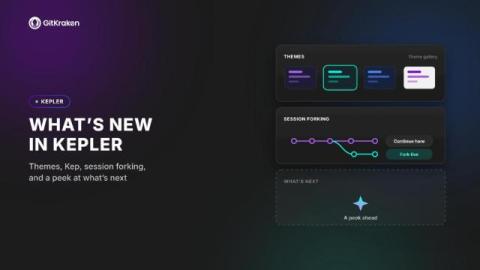
What's new in Kepler: themes, Kep, session forking, and a peek at what's next

Kepler has picked up a lot over the last few releases. So much, in fact, that Gyo, GitKraken’s Director of Engineering, had to trim his list before walking us through it. We sat down with Gyo and Jonathan, our Product Advocate, to go through the highlights. Gyo explained what shipped and why. Jonathan put the features to work live, building themes, cleaning up tasks, and forking a session from Claude to Codex. Here’s what we learned.

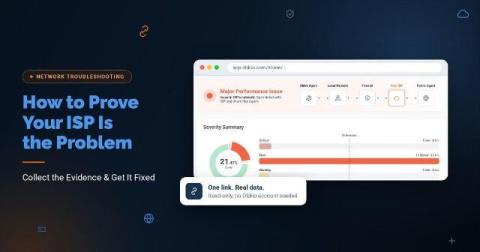
How to Prove Your ISP Is the Problem (With Data)

You call your ISP because calls keep dropping and the Internet crawls every afternoon. Support asks you to restart the modem. Then they test the line from their side, see nothing wrong, and tell you everything looks fine on their end. By the time a technician shows up, the problem is gone, and the ticket gets closed. The issue usually isn't that your ISP doesn't care. First-line support is trained to rule out the customer's network first, and most complaints arrive with nothing they can check.

The Binance Breach Wasn't a Crypto Failure: It Was a Trust Failure

Explore how the $6.36B Binance breach exposed critical gaps in identity, DevOps, and signing security - and what engineering teams can learn from it. The October 29, 2026 theft from Binance is best read as a failure of identity and release-path trust, not a failure of cryptography. Binance's early findings point to a compromised DevOps engineer's laptop that gave an attacker a route into a service container and the ability to submit unauthorized withdrawals.

How to Capitalize AI Spend Without the Gray Area

In this video, Emily Allen, Director, Finance & Accounting at CloudZero, explains why AI capitalization is still unclear for most finance teams, and how CloudZero gives them a repeatable approach. As AI writes more of the code, finance needs to know which AI spend went to qualifying development work and which should be expensed. CloudZero records which project each AI coding session served, what kind of work it was, and what it cost, so finance has the evidence behind every decision.


The $600 AI Cap That Sent Employees Golfing

In this video, Brady Lenahan, VP of Sales at CloudZero, shares what he’s hearing from customers when the cap hits before the month ends: employees who’ve built their workflows around AI stop working productively and wait for next month. Some go golfing, some clean the garage. Either way, finance loses both the productivity and the visibility. There’s a better option than capping AI spend you can’t see.