Operations | Monitoring | ITSM | DevOps | Cloud

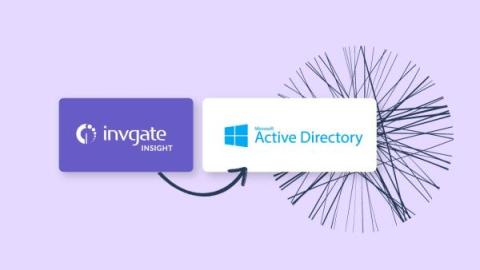
Active Directory Asset Management: How to Connect InvGate Asset Management With Active Directory And Entra ID

Active directory Asset Management means connecting your Active Directory to your IT Asset Management (ITAM) tool so the people and computers registered in the directory feed the asset inventory. IT teams look for it when they want asset owners to come straight from the directory, technicians to sign in with their corporate account, and every computer in the domain to show up in the inventory.

The Truth About End-to-End Testing Explained #softwaretesting #endtoendtesting #devops #qualitytest

End-to-end (E2E) testing brings your entire system together in a staging or UAT environment to test real user paths and ensure core functions work as expected. However, because E2E tests are non-comprehensive and miss edge cases, they must be combined with other testing methodologies. Learn more: speedscale.com.

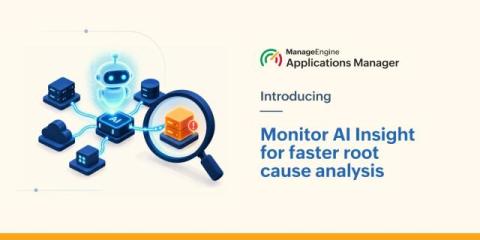
Accelerate troubleshooting with Monitor AI Insight

Monitoring used to mean checking that your dashboards looked fine and starting to troubleshoot when something broke. That approach is outdated. Today, the health of your applications directly affects your business. A slow checkout page, a lagging database, or an unresponsive server costs you customers, revenue, and trust. A problem that once took hours to identify and fix is no longer acceptable. This is where AIOps comes in.

Google's Stock Drop Reveals What AI Is Missing

Google just reported $51.4 billion in quarterly capital spending. Anthropic has filed for an IPO. And GitHub's AI coding explosion is raising serious questions about software security. Is the AI boom creating real business value, or are we heading toward an AI bubble correction? In this episode of ShipTalk, Adam Arellano and Martin Reynolds are joined by cybersecurity expert Jake Bernardes, CSO at Gambit, to break down three major developments reshaping artificial intelligence, software development, and cybersecurity.

Q3 FY27 Product Update: Harness Pipeline

Discover the latest features, enhancements, and updates in the Q3 FY27 product update for Harness Pipeline Q3 FY27 gives you more control over how pipelines run, with project-level concurrency partitions, pipeline identities, and a customizable run form. Policy as Code also expands: you can run policy sets on your own infrastructure and preview a change with Blast Radius Analysis before you save it.

LogicMonitor Elevate 2026 Keynote: Trusting AI to Act

LogicMonitor Elevate 2026 keynote: what it takes to trust AI to act in IT operations. Built for IT ops leaders, SREs, and MSPs. The Chicago opening keynote covers moving beyond the alert loop, where people have acted as the integration layer between tools. IT teams are automating incident response by giving AI context, clear guardrails, and governance, with people accountable and in control. @globalfoundries CIO Vishal Mehra shares how his team's doing it.

Good Agents Need Good Managers: What We Heard at Innovation Week

I used to joke that I got my best parenting ideas from management books, and my best management ideas from parenting books. Now, I'm extending it to agents. Hear me out. When you're teaching a teen how to drive, you don't hand them the car keys on day one. You start in an empty parking lot. You ride along and ask them to talk through what they're doing.

Nokogiri 1.19.5 Closes Three Security Advisories and a Wave of Compaction Crashes

Nokogiri sits under so much Ruby code that its patch releases are worth reading even when the version number looks routine. 1.19.5 is a patch release carrying three security advisories and a long list of crash and memory fixes, so it’s worth pulling in on your next dependency pass.

CVE-2026-109518 APT vulnerability fixes available

Max Justicz discovered and responsibly disclosed a vulnerability in APT, the package manager used in Debian, Ubuntu, and derivative Linux distributions. The vulnerability has been assigned the identifier CVE-2026-109518 and has a severity of High. An on-path attacker who can manipulate the HTTP traffic between a system and an archive server can trigger the installation of an attacker-controlled.deb package file and obtain root privileges on the target system.