Operations | Monitoring | ITSM | DevOps | Cloud

The latest News and Information on CyberSecurity for Applications, Services and Infrastructure, and related technologies.

The Clearinghouse For AI Agents Has A Blind Spot

Jamin Ball’s recent piece, “Systems of Record Won the SaaS Era — Clearinghouses Will Win the Agents Era,” is the cleanest articulation I’ve seen of where the durable moat goes next. His argument is simple and, I think, correct: the SaaS era rewarded whoever owned the system of record, and the agent era will reward whoever owns the clearinghouse.
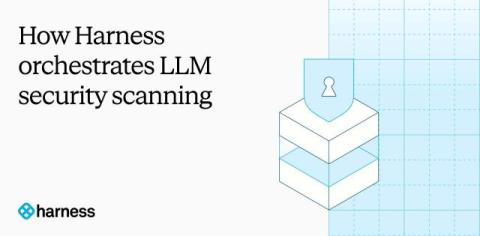

How Harness orchestrates LLM security scanning

Large language models are effective at security review for the same reason they are effective at many other tasks: they reason rather than pattern match. In plain terms, a traditional scanner checks code against a list of known bad patterns, the way a spell checker flags a misspelled word, regardless of what the sentence means. An LLM can instead follow the program's logic: trace a piece of attacker-controlled input through several layers of application code to determine whether it is reachable.

Why FIPS Mode Is Not Enough: What Federal Teams Should Expect Their Vendors to Prove

Federal teams need more than a system setting. They need defensible evidence that the cryptography protecting federal information is validated, correctly configured, and actually used. For platforms such as ScienceLogic, that product-level evidence should come from the vendor, not be reconstructed by the customer.

SOC automation solution guide 2026 with examples

SOC automation can be a confusing category as there is no single type of SOC automation solution or tool, and most security teams use several different approaches at the same time. However, the need for SOC automation is much clearer with recent data on SOC automation showing that 93% of organizations are using or planning to use automation in their security workflows.

Creating Secure and Reliable Digital Signing Processes

Digital signing works best when it is designed as part of a complete business process. Organizations building signing into their own software can evaluate an esignature API from Blueink, a provider focused on developer-led document workflows with REST API tools, SDK resources, embedded signing, webhooks, tracking, and identity-verification options. Its services are relevant to integrated workflows in areas including government, insurance, education, and healthcare. A signature request is only one moment in a longer journey.

How are folks managing CVEs at scale? #itsecurity #opensource #vulnerability #sbom

Dog-walk thoughts on vulnerabilities at scale More CVEs are being found, disclosed and weaponised faster than ever. For a small team with one product, that's manageable: a CVE lands, you fix it. But if you're running thousands of applications across tens of thousands of repos, "the teams will handle it" stops working. It becomes a governance problem.

Why Security and Observability Must Work Together in 2026

Modern IT environments generate more data than ever. Every application request, user login, network connection, cloud workload and endpoint action produces signals that can help teams understand what is happening across the business. Yet having more data has not necessarily made organizations more secure, more reliable, or easier to operate.

It takes a hacker 48 hours to exploit a vulnerability. Why does it take 43 days to patch it?

It is not always possible to patch vulnerabilities as quickly as hackers exploit them, but recent figures show just how much this gap has widened. FortiGuard Labs estimates that the time between the disclosure of a critical vulnerability and its active exploitation has dropped sharply to between 24 and 48 hours. By contrast, Verizon’s 2026 Data Breach Investigations Report shows that organizations take a median of 43 days to complete vulnerability remediation.