Microservices are distributed applications deployed in different environments and could be developed in different programming languages having different databases with too many internal and external communications. A microservice architecture is dependent on multiple interdependent applications for its end-to-end functionalities. This complex microservices architecture requires a systematic testing strategy to ensure end-to-end (E2E) testing for any given use case. In this blog, we will discuss some of the most adopted automation testing strategies for microservices and to do that we will use the testing triangle approach.
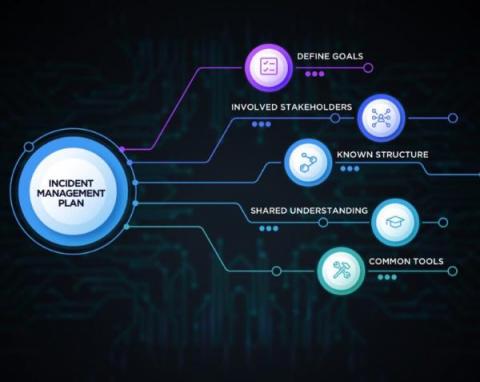
Incident response aims to identify, limit, and mitigate an incident. Whether such an occurrence is a security breach or a hardware failure, formulating and continuously strengthening an incident response strategy has become vital for all businesses in the digital age. Your incident response strategy consists of the processes your organization takes to handle incidents-such as network outages and service-impacting bugs-and the steps taken to mitigate incidents.
There are many computing resources used in different cloud application services to provide online software-as-a-service (SaaS). SaaS differs from traditional applications in that it works from a cloud computing environment. This means that both the application service as well as user data are being hosted by a cloud provider in the cloud. Therefore, the SaaS and data are accessible from anywhere as long as there's online access. This model provides a distinct advantage from a software perspective.
File Integrity Monitoring, aka as FIM, is a must-have feature for anyone in charge of security. With FIM, one can detect when a critical file, such as a file that belongs to the Operating System, or a key configuration file, is changed. In most cases, configuring FIM is straightforward: If the file changes then generate an alert.
Incident response is one of the most challenging tasks that IT teams face. It's challenging not just because it typically involves many stakeholders and moving pieces, but also because teams usually face pressure to respond as quickly as possible. That's why investing in incident response automation is a wise choice. Although it may not be possible to automate every aspect of every incident response workflow, being able to automate at least the major elements of incident response will yield incident management processes that are faster, more reliable, and more consistent.Keep reading to learn about the components of incident response and which incident response activities to start automating.