Operations | Monitoring | ITSM | DevOps | Cloud

The latest News and Information on DevOps, CI/CD, Automation and related technologies.

Managing AI Agent Primitives Like Real Software Packages with APM and JFrog

AI agents are part of the modern development workflow. They write code, review pull requests, generate tests, call tools, interact with MCP servers, and help developers move faster. But behind every useful agent, there is something just as important as the model itself: the context that tells the agent how to behave. That context can include skills, prompts, instructions, hooks, commands, scripts, references, and MCP server definitions. In a small project, managing these primitives is pretty simple.

Enterprises are making their biggest AI bets blind

AI cost observability is the practice of measuring, attributing, and analyzing AI workload costs at the request, model, and workflow level in real time. It connects cloud infrastructure spend, inference and token costs, and business attribution (cost per feature, team, customer, or product) so engineering, finance, and product teams can see where AI spend goes and whether it creates value. On July 14, IBM had its worst trading day since 1987.

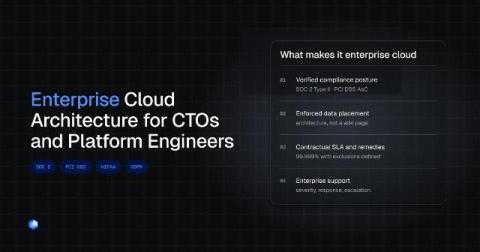
This is what cloud freedom looks like

Proprietary tech. Vendor lock-in. Pricing you can't predict. The hyperscaler model has defined cloud computing for years. Civo was built to change that. Civo CEO Mark Boost sets out the vision, a multi-cloud and hybrid cloud future built on open standards, full cloud parity, and genuine user choice. Public cloud, private cloud, and AI infrastructure that gives you total control over your data, your infrastructure, and your spend.

What is AI cost observability? A guide to tracking LLM and AI spend

AI cost observability is the practice of measuring, attributing, and analyzing AI workload costs at the request, model, and workflow level in real time. It connects cloud infrastructure spend, inference and token costs, and business attribution (cost per feature, team, customer, or product) so engineering, finance, and product teams can see where AI spend goes and whether it creates value.

The rise of dark code and the death of architectural intent

As Staff Engineers and Principal Architects, most of us have spent years thinking about long-term system health. We are considerate of the company’s business objectives and strategy, accumulation of technical debt, and operational risk. For us it is not about whether code works today, but whether the engineer who inherits it in three years will be able to understand what it was trying to do and why. That's what makes a codebase maintainable rather than just functional.

Eliminate Reliability Blind Spots in AWS, Azure, and GCP

Cloud resilience often feels like an uphill battle. When you’re overseeing hundreds of applications across different providers, identifying potential failure points manually is nearly impossible. You’re left trying to find the needle in a haystack—a needle that could take down your entire application at any moment. To truly protect your uptime, you have to break the cycle of reactive troubleshooting.