Operations | Monitoring | ITSM | DevOps | Cloud

The latest News and Information on DevOps, CI/CD, Automation and related technologies.

A Few Minutes More: Add Xray DevSecOps to Artifactory Enterprise on Azure

In a prior blog post, we explained how to install or update Artifactory through the Azure Marketplace in the amount of time it takes for your coffee order to arrive on the counter. Now you can add to your self-managed (BYOL) Artifactory deployment Xray, the cream of software component analysis (SCA) tools, through the Azure Marketplace as well.

Introducing HA MicroK8s, the ultra-reliable, minimal Kubernetes

15th October 2020: Canonical today announced autonomous high availability (HA) clustering in MicroK8s, the lightweight Kubernetes. Already popular for IoT and developer workstations, MicroK8s now gains resilience for production workloads in cloud and server deployments. High availability is enabled automatically once three or more nodes are clustered, and the data store migrates automatically between nodes to maintain quorum in the event of a failure.

Dangers of Console-Driven Development

AWS offers the ability to login to a web UI dashboard. In this dashboard, you can add, edit, and deploy various cloud resources. When I was first getting started with AWS, this is where I began for two reasons: My very first full-time job as a Software Engineer was on a small enough team that all of our infrastructure was setup using the AWS console in a single AWS account.

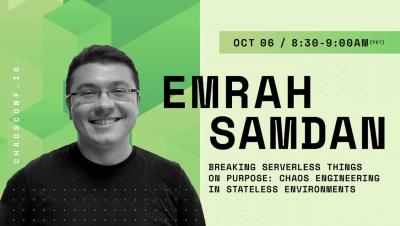
Breaking Serverless Things on Purpose: Chaos Engineering in Stateless Environments - Emrah Samdan

Serverless enabled us to build highly distributed applications that led to more granular functions and ultimate scalability. However, it also brought the risk of failure from a single microservice to many serverless functions and resources. You might be able to predict and design for certain troublesome issues but there are many, many more that you probably will not be able to easily plan for. How do you build a resilient system under these highly distributed circumstances? The answer is Chaos Engineering: Breaking things on purpose just to experience how the whole system will react.

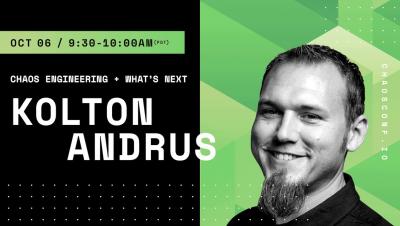
Chaos Engineering: The Path to Reliability - Kolton Andrus

We’re all here for the same purpose: to ensure the systems we build operate reliably. This is a difficult task, one that must balance people, process and technology during difficult conditions. We operate with incomplete information, assessing risks and dealing with emerging issues. We’ve found Chaos Engineering to be a valuable tool in addressing these concerns. Learn from real world examples what works, what doesn’t, and what the future holds.

Identifying Hidden Dependencies - Liz Fong Jones

You don't need to write automation or deploy on Kubernetes to gain benefits from resilience engineering! Learn how Honeycomb improved the reliability of our Zookeeper, Kafka, and stateful storage systems through terminating nodes on purpose. We'll discuss the initial manual experiments we ran, the bugs in our automatic replacement tools we uncovered, and what steps we needed to progress towards continuously running the experiments. Today, no node at Honeycomb lives longer than 12 months, and we automatically recycle nodes every week.

Looking back on Chaos Conf 2020

It’s already been a week since we closed our third annual Chaos Conf! While we were forced to take the conference online, this meant that more of you could join us. Over 3,500 people signed up to help make this the world’s largest Chaos Engineering conference. That’s 5x more than 2019, and nearly 10x more than 2018! This is a testament to the growth of Chaos Engineering as a practice across many different industries and around the world.

The Jfrog Platform - End-to-end Devops Solution

Manage your DevOps pipeline from a single pane of glass. The JFrog Platform provides a universal end-to-end solution that integrates with your ecosystem to orchestrate and optimize all key processes in your CI / CD pipeline. Deliver fearless updates from code to the edge in self-managed, on-prem, hybrid, and multi-cloud environments.

Lead Times and Psychological Safety within the Five Ideals - Gene Kim

The biggest challenges engineering organizations face are not technical. They’re fundamental problems with how we think and go about doing work, and the environments that we work in. In this talk, Gene Kim will share the Five Ideals and how they relate to Chaos Engineering. He’ll also show how the Five Ideals help build stronger, better performing, and ultimately more reliable companies.